

Key Takeaways
- Deep vein thrombosis (DVT) occurs when a blood clot forms in a vein in the arm, leg, or pelvic region.
- A pulmonary embolism is when a clot breaks loose from a vein in the leg and travels to an artery in the lung, blocking blood flow.
- Providers will treat these clots with medications or minimally invasive procedures to break up the clot and restore blood flow.
When you need treatment for your arteries and veins, trust our vascular specialists at Rochester Regional Health’s Sands-Constellation Heart & Vascular Institute. From advanced diagnostic imaging to minimally invasive treatments and complex surgery, our team offers the expertise and options you need.
Pulmonary embolism is a serious, life-threatening health condition in which a blood clot travels – usually from the leg – to an artery in the lungs, blocking blood flow.
According to the American Lung Association, about 1 in 1,000 people in the U.S. are affected by pulmonary embolism – including Philadelphia Eagles quarterback Jalen Hurts, who was diagnosed with deep vein thrombosis (DVT) – blood clots in a major vein in the leg – and suffered bilateral pulmonary emboli – blood clots in both lungs.
As the Service Line Division Head of Vascular Surgery at Rochester Regional Health’s Sands-Constellation Heart & Vascular Institute, Ryan Lydon, MD, frequently treats patients with DVT, pulmonary embolism, and other similar vascular conditions. He explains the risk factors linked to these blood clots, how they are diagnosed and treated, and when it is most important to seek care.
What is deep vein thrombosis?
Deep vein thrombosis (DVT) occurs when a blood clot forms in a deep blood vessel in the leg or arm. These clots can be in the calf, thigh, pelvis, or upper extremity.
Blood clots associated with DVT form when blood flow slows, blood vessels are damaged, and conditions make it easier for blood to clot.
Roughly half of patients who experience DVT have no symptoms, according to CDC data. For those who do have symptoms, they are usually swelling, pain, warmth, or redness around the area where the clot has formed.
Who is at risk of pulmonary embolism?
When someone has a DVT and some or all of the clot breaks loose, it can travel to an artery in the lungs.
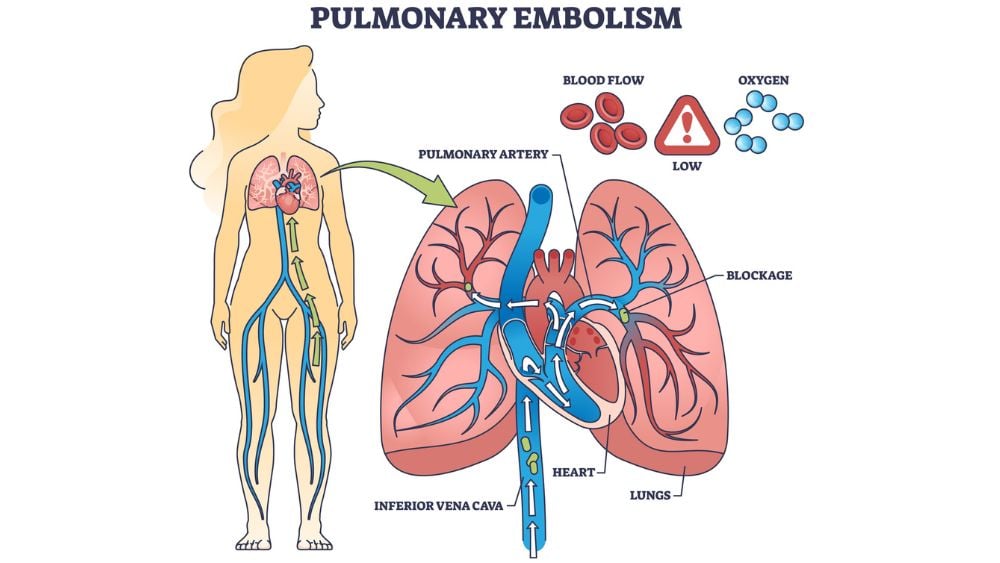
Blood clots can develop for many reasons, but certain people face a higher risk of developing pulmonary embolism compared to others.
Factors that may increase someone’s risk of developing dangerous clots include:
- genetics (family history)
- oral contraception
- viral illnesses
- recent surgery or trauma
- long car rides or flights
- cancer diagnosis
- pregnancy
- obesity
- dehydration
For someone who has one or more of these risk factors, Dr. Lydon encourages them to keep the risk in the back of their mind. If they develop an unexplained pain or swelling in the calf or the leg, it is important to schedule an appointment with a provider soon.
Whether you want virtual urgent care on demand, an urgent care location, or a primary care provider, we are here for you. Easily schedule appointments or find walk-in care when and where needed.
“If you are feeling like it is more than just a bruise or pain from twisting an ankle or pulling a muscle, we recommend seeking medical attention and undergoing appropriate imaging with an ultrasound to make sure a blood clot has not developed,” Dr. Lydon said.
Diagnosing DVT or pulmonary embolism
If you have any risk factors and experience any of the following symptoms, you should see a healthcare professional as soon as possible:
- coughing with bloody mucus
- rapid breathing
- chest pain that worsens with coughing
- dizziness or lightheadedness
- low blood pressure
- rapid and/or irregular heart rate
Patients will undergo advanced imaging to determine whether they have a blood clot, along with multiple blood tests.
Treatments for pulmonary embolism
The main treatment for blood clots is usually a blood thinner medication. The earlier these can be administered, the better the outcome for the patient.
Minimally invasive procedures are also available for patients with more extensive clotting. Providers will go perform a needle stick into the vein in the back of the knee and take pictures of the leg’s venous system to determine the location and extent of the clot.
Using those images helps to inform the treatment plan for the vascular care team.
“We use multiple therapies and medical techniques to remove the clots, including suction therapies, mechanical removal, administering clot-busting medications, or placing a vena cava filter to catch the clot itself before it reaches the lungs,” Dr. Lydon said.
“These minimally invasive options help reduce potential long-term complications from that clot burden for the remainder of the patient's life.”
If left untreated, pulmonary emboli can lead to permanent lung damage, lower oxygen levels in your blood, and potential damage to your organs due to lower oxygen supply. Untreated extensive DVT can result in significant chronic pain and swelling of the leg.
“We routinely offer these treatments at the Sands-Constellation Heart and Vascular Institute,” Dr. Lydon said. “I see a range of patients every day, some who we manage with anticoagulation alone, all the way to patients with extensive DVT who need procedural therapies to cut down on chronic complications.”
Preventing blood clots
Especially for patients who have an increased risk of clotting, taking precautions to prevent clots from forming is important.
For people who are traveling and may be sitting still for several hours, staying hydrated and wearing compression socks is important. Standing and walking around for even a few minutes can keep your blood circulating and reduce the risk of a clot forming.
Aside from these practical suggestions, eating a heart healthy diet, staying physical active, and reducing tobacco and alcohol use can lessen the risk of developing a pulmonary embolism.
When to find treatment for DVT and pulmonary embolism
If you think you have symptoms linked to DVT or a pulmonary embolism, the most important thing to do is listen to your body.
Seeking out medical care as a precaution is a better alternative to the possibility of suffering life-altering consequences from a blood clot that is left untreated.
“If your intuition is telling you something is not right in your day-to-day life, that is a good sign to see a healthcare professional,” Dr. Lydon said. “If it's nothing, it's nothing. But you should not ignore something that could potentially be devastating for you going forward.”
Get Care Now
Whether you want virtual urgent care on demand, an urgent care location, or a primary care provider, we are here for you. Easily schedule appointments or find walk-in care when and where needed.

Related Articles
