Key Takeaways
- Rotator cuff and labrum tears, elbow tendinitis, stress or growth plate fractures, and bruising are some of the most common injuries in baseball.
- In very rare cases, a line drive to the chest may cause commotio cordis – an unusual condition that can lead to cardiac arrest.
- Overuse injuries require rest. If you continue to play through the pain, it increases your risk of developing a more serious injury.
Our Orthopedic Urgent Care centers in Victor and Henrietta offer same-day treatment for unexpected injuries involving bones, joints, and muscles. With convenient walk-in hours available during the day, evenings, and Saturdays, we’re here when you need us most.
Baseball season brings high school, college, and professional athletes out of the final stretches of winter into the warmer weather of spring.
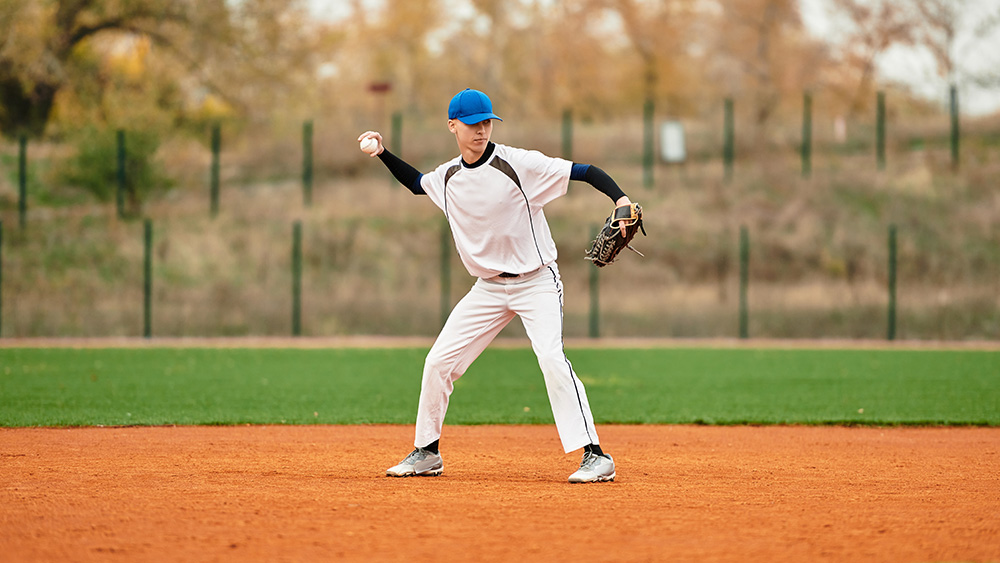
Like all athletes, baseball players face a risk of injury when they play, usually from throwing and batting.
Christine Blonski, DO, is a board-certified primary care sports medicine physician at Rochester Regional Health Orthopedics – Wilson Center and Baycreek - who also serves as the head team physician for RIT Athletics and program director for the Primary Care Sports Medicine Fellowship at Rochester Regional Health.
Dr. Blonski breaks down some of the most common baseball injuries, how sports medicine physicians treat them, and what players can do to prevent these injuries.
Rotator cuff injuries
The rotator cuff is a group of muscles and tendons that stabilize and control the motion and rotation of the shoulder.
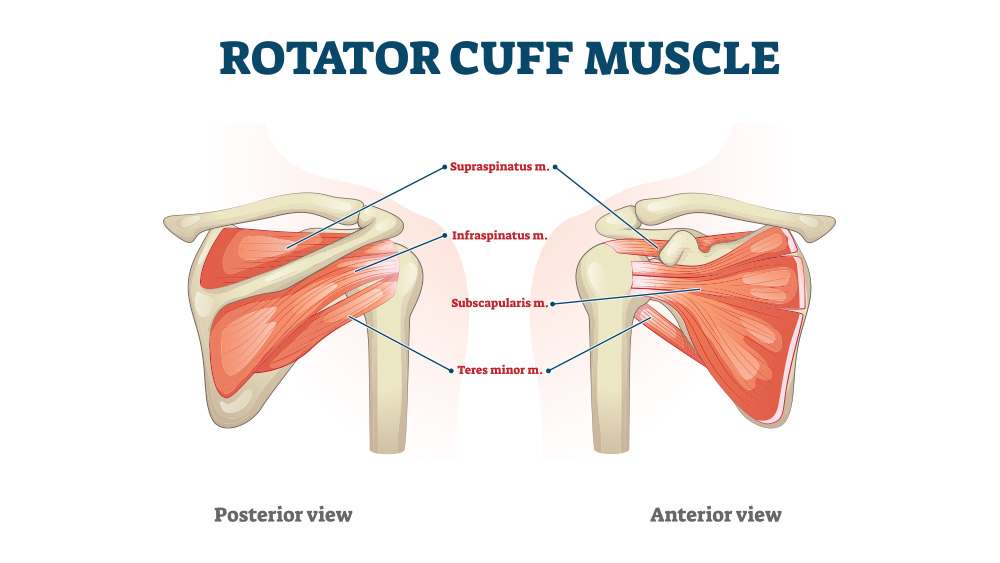
Since baseball players use their shoulder muscles frequently for repetitive throwing, this puts a lot of stress on this area of the body. Overuse can lead to inflammation and pain, which usually presents as tendinitis or strain in the rotator cuff.
Treatment
Resting and icing the injured area can help to reduce inflammation. Once the player is recovered, proper training, therapy, and better understanding the biomechanics of throwing is needed to prevent future injury.
“It’s important to look at how an athlete is throwing overhand and how they transfer force from the ground through their arm to generate power for the throw,” Dr. Blonski said. “Throwing programs, volume, and technique are really important in mitigating stress on those areas of the body.”
Labral tear or deterioration
The labrum is a cartilage rim around the deep socket of the shoulder that helps to create better shoulder stability. When there is too much stress placed on the bicep tendon – which is anchored at the superior rim of the labrum, the cartilage can tear.
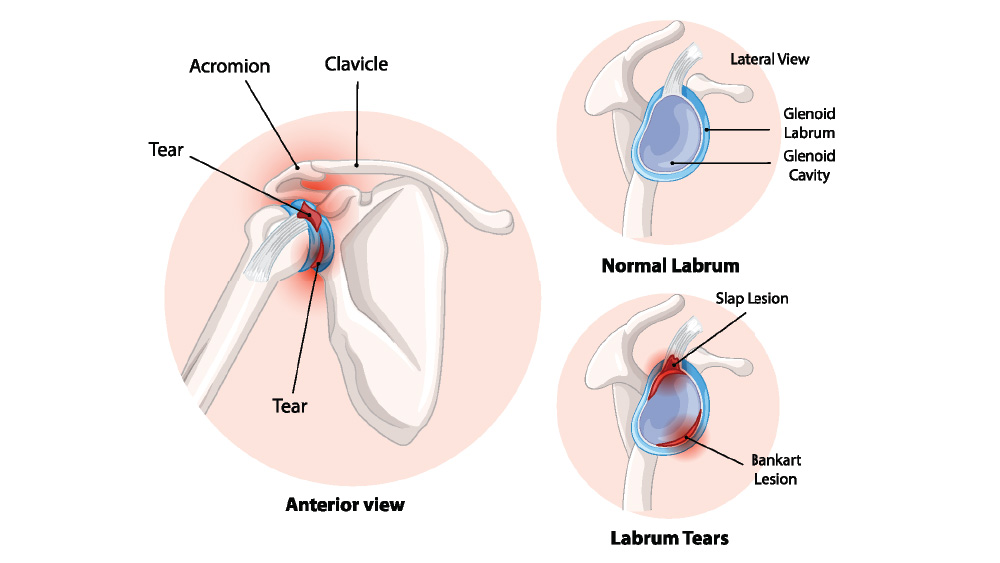
In baseball, when a player is throwing the ball overhand, that forward and rotational motion and the subsequent follow-through put tension on the bicep tendon anchor at the labrum. With repetition over time, the labrum can separate from its attachment to the bony glenoid at the top of the joint, leading to pain and shoulder instability problems.
Treatment
Labrum strains or tears occur on a spectrum. A player with a sore shoulder may need to modify their activities to allow their shoulder to rest for a little while to reduce inflammation. Physical therapy is often recommended to evaluate the biomechanical function of the shoulder and correct imbalance that contributes to overload and injury.
However, if the pain continues and it is ignored, the chances of a tear are increasingly likely. A labrum tear will require surgery to restabilize the joint, which can take several months to recover from.
“If you continue to throw through pain, as many athletes are pressured to do in order to perform, you can progressively damage various structures and that can either end up tearing your rotator cuff or separating the labrum from the bony socket of the shoulder,” Dr. Blonski said.
Elbow tendinitis
Another joint that absorbs a lot of stress during the sport of baseball is the elbow. Players dealing with elbow tendinitis feel this strain along their flexor tendon and ulnar collateral ligament.
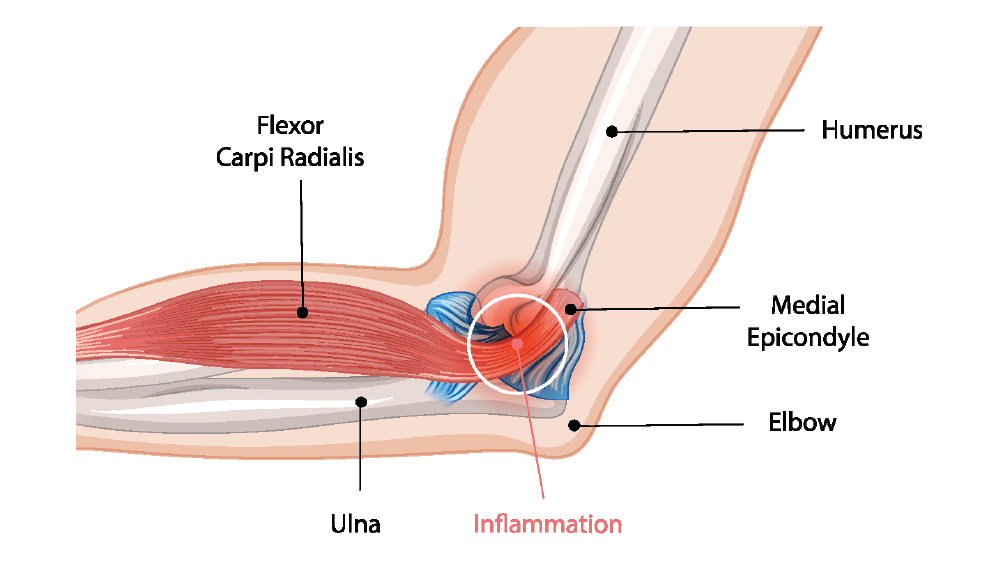
This pain is mostly linked with throwing technique. As you come forward after reaching back and overhead to throw the ball, you lead with your elbow, and your hand and wrist follow through to release the ball with extension.
This motion puts a lot of stress on the elbow and the structures that stabilize the inside of the elbow.
“The more times you do that motion, your elbow can only take so much stress until you develop some deterioration in the attachment of where the muscles go,” Dr. Blonski said.
Treatment
Players with elbow tendinitis need to take time off and rest so the inflamed tendon can heal. In addition to activity modification, wearing a brace can help to stabilize or offload the elbow tendons.
To prevent recurrent tendinitis, players will need to review and correct their throwing mechanics. Strengthening the muscles around that strained area and improving throwing efficiency will also optimize distribution of force around the whole kinetic chain to mitigate injury risk in the future.
Unfortunately, some elbow injuries start out as tendinitis, but repeated strain on the stretch mechanism along the inside of the elbow can also cause chronic damage to the ulnar collateral ligament – which baseball pitchers dread. Treatment for this injury is a reconstructive surgery known as Tommy John surgery.
“If you continue to throw through the pain, your ligament will slowly have micro tears from stretching the ligament over time,” Dr. Blonski said. “This gets looser over time, leading to instability at the elbow, which can cause pain and other damage.”
Stress or growth plate fractures
Young athletes who do the same motions frequently can develop repetitive use injuries, which can progress to stress fractures or growth plate fractures.
For youth baseball players, both the shoulder and elbow have growth plates in the bones that are prone to stress and inflammation because they have not yet hardened fully into bone.
If you put too much stress on those areas, growth plates can gradually be damaged. Growth plate damage has the potential to cause long-lasting issues because children and adolescents are at risk of stunting their growth or developing arthritis in the future.
“When you have older athletes whose bones have fully hardened, they face less risk for these growth plate stress injuries,” Dr. Blonski said.
Treatment
From a prevention standpoint, youth baseball leagues have guidelines in place for how much throwing should be done at a young age.
Treating stress or growth plate fractures requires immobilizing the affected area using a cast or splint for about two weeks, then reevaluating the injury using x-rays.
Bruising or contusions
Batters who are struck by a ball or players who are hit by a swinging bat can suffer deep bruising, contusions, and even fractures.
Sometimes, the ball can come back into a catcher’s chest or head. These situations are rare, but possible. The same is true if a batter hits a pitcher or other player with a line drive. If a player is hit in the wrist by a pitch or the nub of a bat strikes their finger or thumb in just the right spot, fractures are possible.
Treatment
Injuries where a player is hit by a ball are typically ones you can play through after putting ice on the injury to reduce swelling.
For possible fractures, look for swelling and pain with any sort of movement. Imaging through x-rays can confirm a fracture. Splinting or a cast for 2-6 weeks will typically help the injury to heal.
Commotio cordis
In some extremely rare cases, a person might experience cardiac arrest induced by blunt force trauma to the chest called commotio cordis. Commotio cordis can cause ventricular fibrillation – an arrhythmia of the heart’s lower chambers – which leads to loss of consciousness, difficulty breathing, sudden collapse, and/or loss of pulse.
This rarely happens with batters, but sometimes in-field players can be hit by a line drive straight to the chest.
Treatment
If this happens, do not delay immediate care. Use AEDs available on the sidelines and call 911 for emergency care.
Athletic trainers who are trained and certified in CPR are on hand at most sporting events for situations such as these. This condition, while very rare, warrants immediate medical care at an emergency department.
“As sports medicine doctors, we have a passion for taking care of athletes, but also a better understanding of what's involved with specific sports as far as the rules of the game, what the training is involved, the nuances of why certain sports have certain injuries, and how we address them while allowing the athletes to still play the game and be successful,” Dr. Blonski said.

Related Articles