

Key Takeaways
- Magnesium is essential for many body functions and has broad benefits for cellular, cardiovascular, neurological and metabolic health.
- Magnesium has anti-inflammatory and antioxidant properties that help in disease prevention and overall health.
- Maintaining adequate magnesium level is important for managing risk of heart disease, hypertension, insulin resistance, Alzheimer's disease, and more.
Magnesium is a mineral naturally found in the human body. Over decades of studying mineral and vitamin composition in humans, scientists have found magnesium is closely tied to many processes in how the body regulates itself.
Primary care providers have found that, for the right patients, magnesium can have important benefits for their health.
Here are a few ways that magnesium can improve some patients’ health.
Promotes heart health
Research suggests magnesium helps to keep blood vessels open and prevents arteries from stiffening. Studies also suggest adding magnesium-rich foods to your diet and/or as a supplement can lower blood pressure and reduce the risk of cardiovascular disease.
Lowers type 2 diabetes risk
Magnesium is shown to boost the body’s insulin sensitivity, which helps to protect against type 2 diabetes. Studies suggest people whose diets include more magnesium-rich foods have a lower risk of developing type 2 diabetes.
Reduces high blood pressure
Incorporating magnesium into your diet or taking it as a supplement after discussion with your primary care provider can lessen your risk of hypertension. Several studies and scientific reviews suggest people with higher magnesium intake lowered their blood pressure.
Improves bone density
Magnesium is important to both the formation and maintenance of strong bones. Scientists suggest men and woman alike benefit from added magnesium. Post-menopausal women who take magnesium supplements are more likely to see reduced osteoporosis risk, as well.
Improves sleep
Research suggests magnesium has a calming effect on the nervous system. Numerous reviews show that effect can help to improve the overall quality of sleep that a person experiences, reducing the number of times they woke up at night and improving how long they slept.
Relaxes muscles
Calcium and magnesium levels help muscles contract and relax properly. When magnesium levels are properly regulated, research shows they play a role in protein synthesis, which helps with muscle repair and growth. This allows muscles to return to their rest state quicker.
Reduces inflammation
Studies suggest people who consistently take in an adequate amount of magnesium are more likely to have less overall inflammation. This helps with both chronic low-level inflammation throughout the body, as well as more acute exercise-induced inflammation as mentioned above.
Preventing migraine headaches
Because magnesium helps to boost neurotransmitter release and keep blood vessels open, it has been shown to reduce the likelihood of migraines. Studies suggest taking magnesium as directed by a healthcare provider may help to prevent migraines.
How much magnesium to have each day
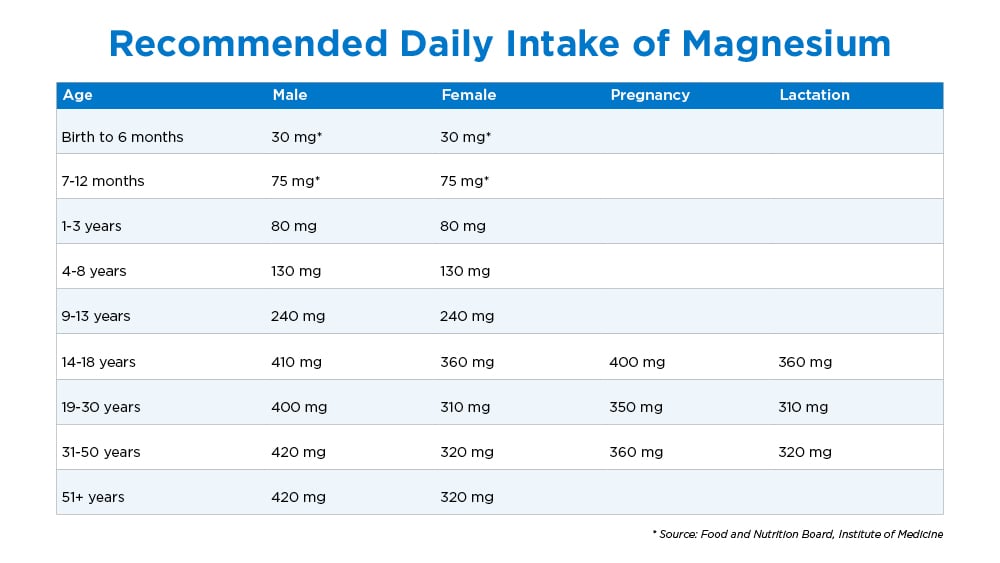
The amount of magnesium people should have each day varies depending on their sex, age, health conditions, and diet. The current daily intake as recommended by the USDA is below:
“Primary care physicians recommend that patients get as much magnesium through a healthy diet that is rich in magnesium as possible,” said Ingrid Watkins, MD, a family medicine physician at RRH’s Health First Family Medicine at Clifton Springs. “For general supplementation, magnesium citrate, malate, and aspartate are better absorbed than magnesium oxide or carbonate. Doses of 300-400 mg elemental magnesium daily are sufficient for most adults. Always check with your doctor before taking a magnesium supplement, as the correct amount for you may vary depending on your health conditions.”
Foods that are high in magnesium include:
- Peanut butter
- Legumes (pinto, black, lima, navy, and garbanzo beans)
- Green leafy vegetables (spinach, kale, collard greens, mustard greens, etc.)
- Potatoes
- Whole grains
- Fruits – especially bananas and avocados
- Milk, milk products, and milk substitutes (cow or goat milk, yogurt)
- Tofu
- Canned fish

Related Articles