Key Takeaways
- Measles often starts with a fever, cough, runny nose, and pink eye before tiny white spots in the mouth and a rash set in.
- If you test positive, you’ll be told to isolate from others. Healthcare providers will help to notify others who may have been exposed.
- Getting the MMR vaccine is the best way to avoid getting measles.
Whether you want virtual urgent care on demand, an urgent care location, or a primary care provider, we are here for you. Easily schedule appointments or find walk-in care when and where needed.
With a growing number of measles cases spreading through unvaccinated patients, knowing the signs of a potential measles exposure or outbreak is important to know.
Measles affects pregnant women, children under 5, adults over 20, and people with compromised immune systems more often.
One in five children who are infected with measles end up hospitalized, according to CDC data. Beyond the symptoms of the illness itself, measles can cause serious complications including severe brain swelling (encephalitis) and pneumonia.
Our experts explain what early symptoms to look out for with measles, what happens after a positive measles test, and the best way to prevent measles.
Early signs of measles
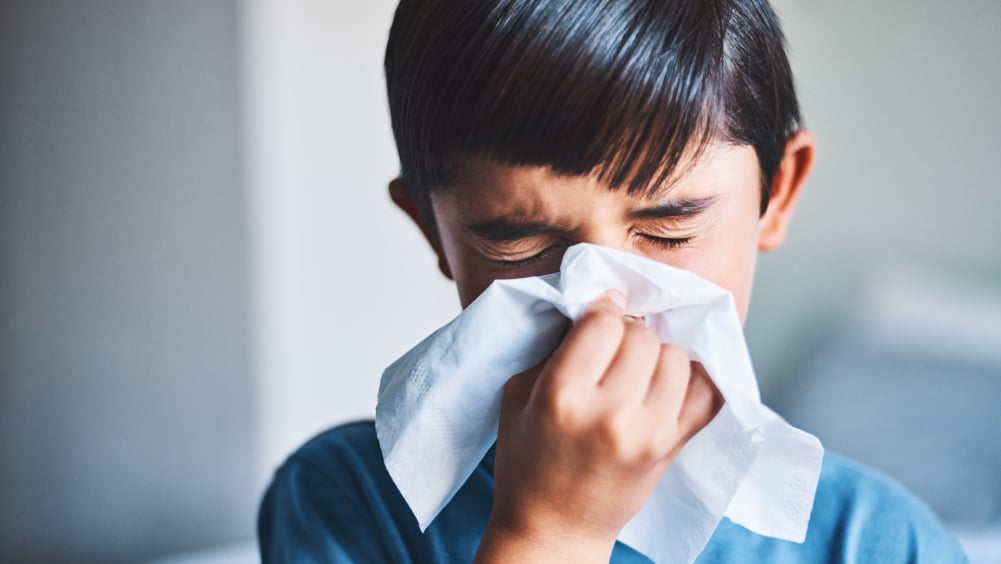
Symptoms of measles tend to start within 7-14 days of being exposed to someone with the illness. Look for:
- Fever (up to 104°)
- Cough
- Runny nose
- Red, watery eyes
The disease spreads through the air with coughs and sneezes and can linger in a room up to 2 hours after the infected person has left.
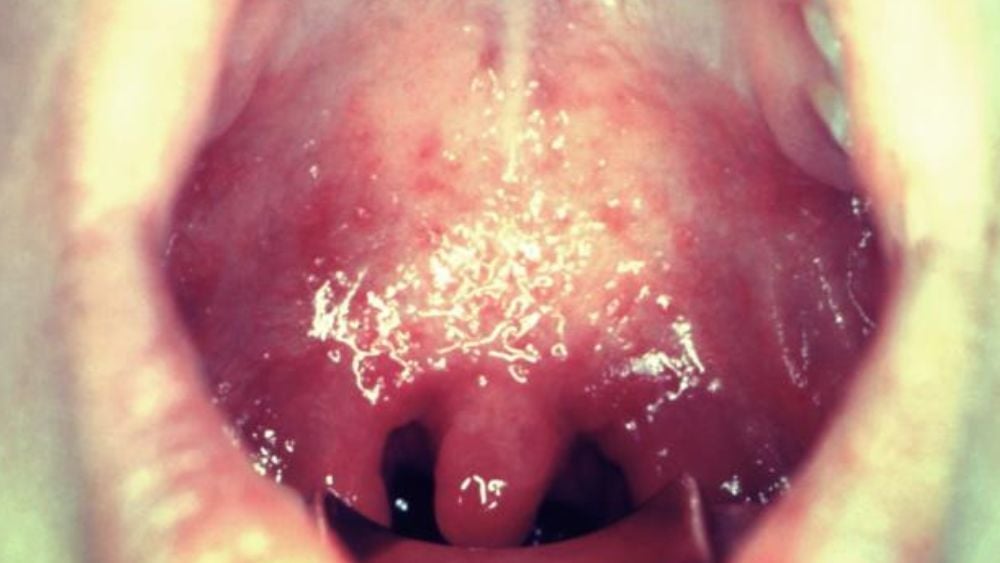
Within 2-3 days of early symptoms setting in, tiny white spots called Koplik spots may start to appear inside the mouth.
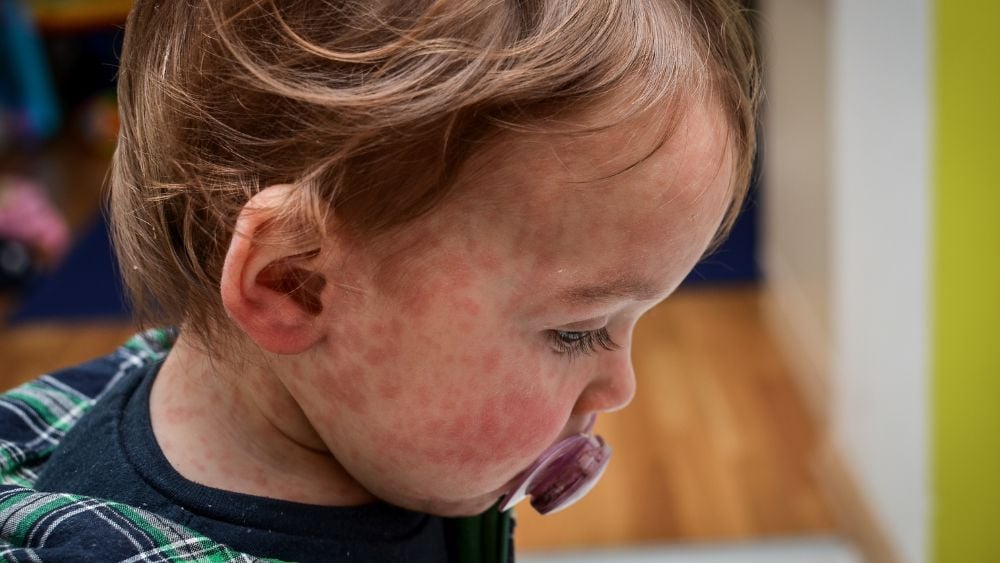
A couple days after these spots, the measles rash begins to appear – usually starting on the face and neck, then spreading down the neck to the torso, arms, and legs.
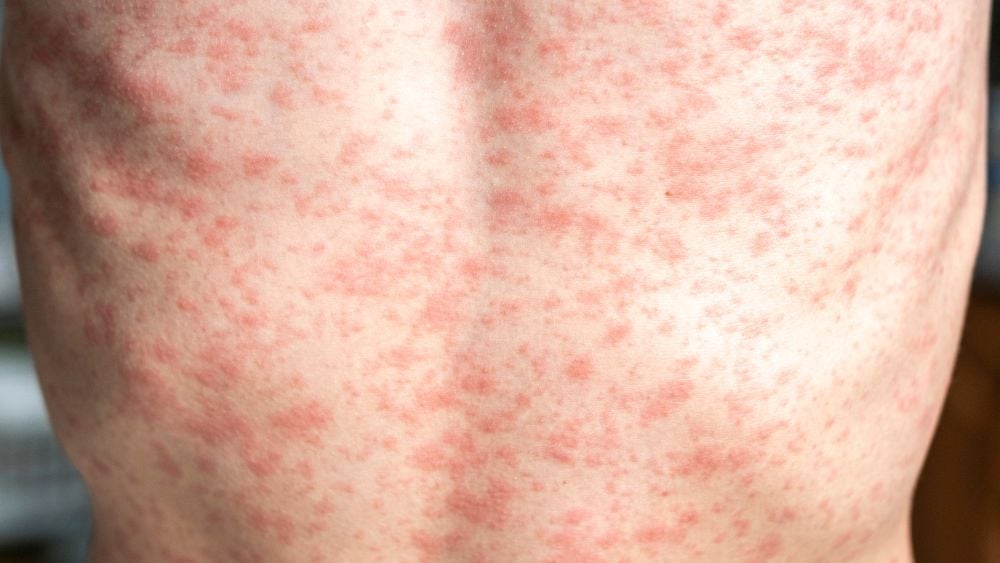
People with measles may also develop ear infections and diarrhea.
If someone has some or all of these symptoms, the next questions to consider are whether you have traveled in the last 3 weeks and/or are in contact with someone who is not vaccinated against measles.
What happens if someone tests positive for measles?
If a patient shows signs of measles and has traveled or potentially been exposed to an unvaccinated person, they will be isolated from others as a precaution until tests can determine if they have measles.
A provider will use a nose or throat swab, urine sample, and blood test to test for measles.
If the test results are positive for measles, the patient will be asked to head directly to their home and isolate there for four days, according to CDC recommendations. Anyone they were in contact with or shared a space with recently should be contacted about the exposure.
The local Public Health Department will be in contact with anyone who was exposed to the person who tested positive so they can be aware of any potential symptoms if they pop up. Public Health also helps with contact tracing – the process of notifying anyone who may have been exposed to measles.
Treating measles at home
Measles does not have any medications that directly treat the disease, so any fever, cough, or runny nose are treated with over-the-counter medications.
Drink plenty of fluids to prevent dehydration, get as much rest as possible, and limit the time spent with others. Other people who are in contact with someone with measles should wear an N95 mask if bringing food to them.
How effective is the measles vaccine?
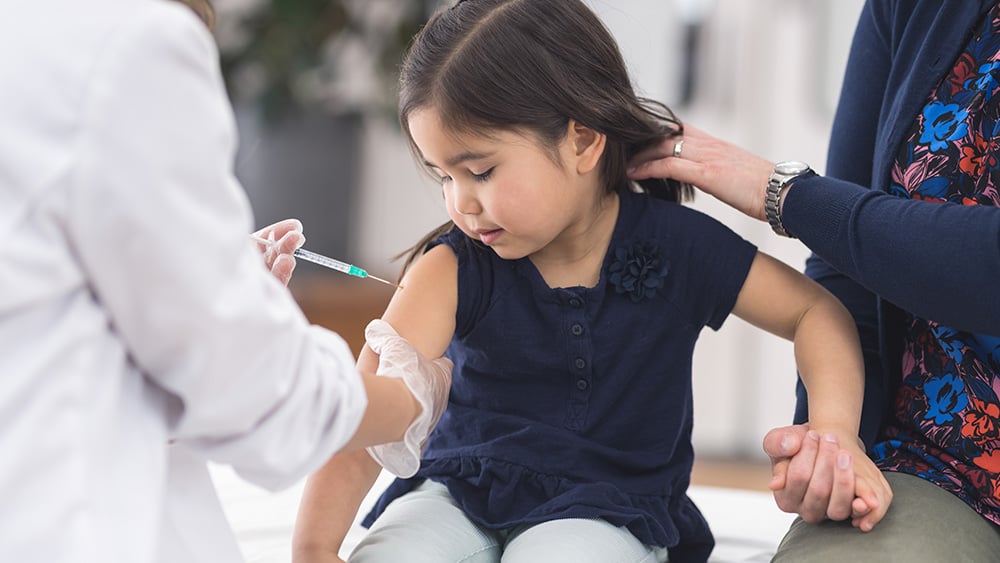
The MMR (measles, mumps, and rubella) vaccine is the best way to avoid getting measles. Decades of research shows the MMR vaccines is 97 percent effective in preventing measles infections in people who received two doses. Some level of protection is shown within 72 hours of getting the vaccine; the vaccine reaches its highest level of protection after about two weeks.
Children are recommended to receive two doses – one at 12-15 months and one at 4-5 years. The protection received from this vaccine lasts most people their entire life.
Adults can get a single dose of the MMR vaccine if they didn’t have it as a child. If they are in a post-high school educational setting, work as a healthcare professional, or travel internationally, experts recommend two doses.
“We utilize and celebrate all types of scientific advances that give us better medicines and keep us healthy – measles vaccine is one of those great discoveries that we are fortunate to have in modern medicine,” said Jennifer Gutowski, Vice President of Infection Prevention at Rochester Regional Health.
Can you get measles if you are vaccinated?
Cases where people who have two doses of the MMR vaccine are exposed to measles and end up contracting the illness are very rare.
Getting the vaccine protects against nearly all infections in a way that no other methods do.
If you or your child need to receive the MMR vaccine, schedule a visit with a primary care provider or pediatrics provider as soon as possible.
Related Articles