Key Takeaways
- Monthly self-breast exams pose a risk of harm from false positive test results and a lack of evidence of overall benefit.
- Know your breasts and look for changes in size, shape, or color, skin changes, and any redness, soreness or swelling.
- If you do find something, don't panic. Call your provider and schedule an appointment to get it checked out.
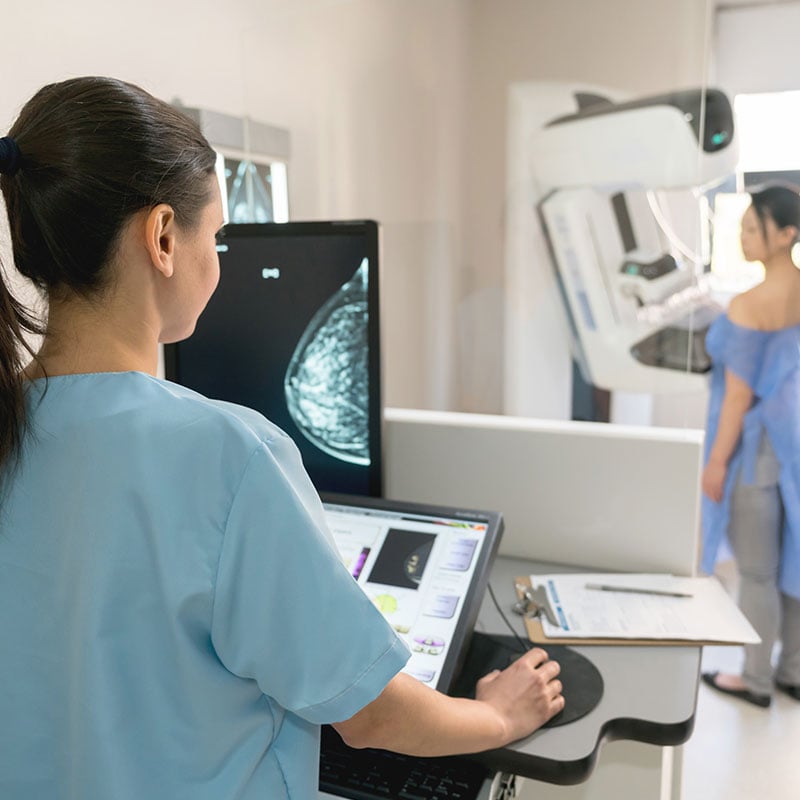
We partner with you to detect and diagnose breast cancer as early as possible. With advanced imaging services and compassionate providers, we work together with our patients to give you the comprehensive breast screening care they deserve.
Regular screenings for breast cancer are often done through mammograms. You can also maintain good breast health by practicing “breast self-awareness.”
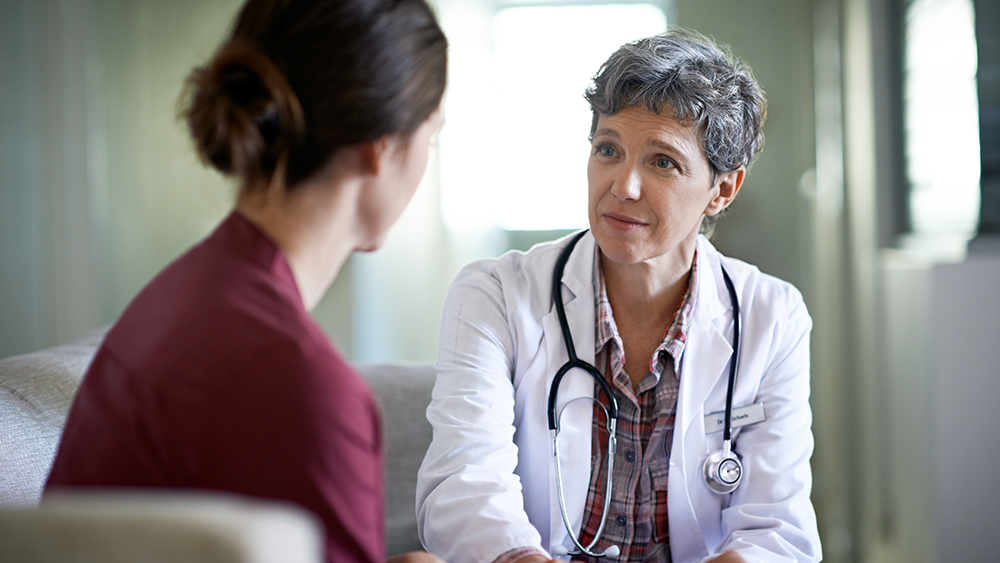
We asked Christopher Caldwell, MD, a surgical oncology provider with Rochester Regional Health, to describe what women should be looking for and when to contact a provider for additional screening.
Breast self-awareness vs. self-breast exams
Monthly breast self-examination is no longer recommended by most major health organizations.
Physicians with the American Cancer Society, American College of Gynecology, and U.S. Preventative Services Task Force say there is a risk of harm from false positive test results and a lack of evidence of overall benefit.
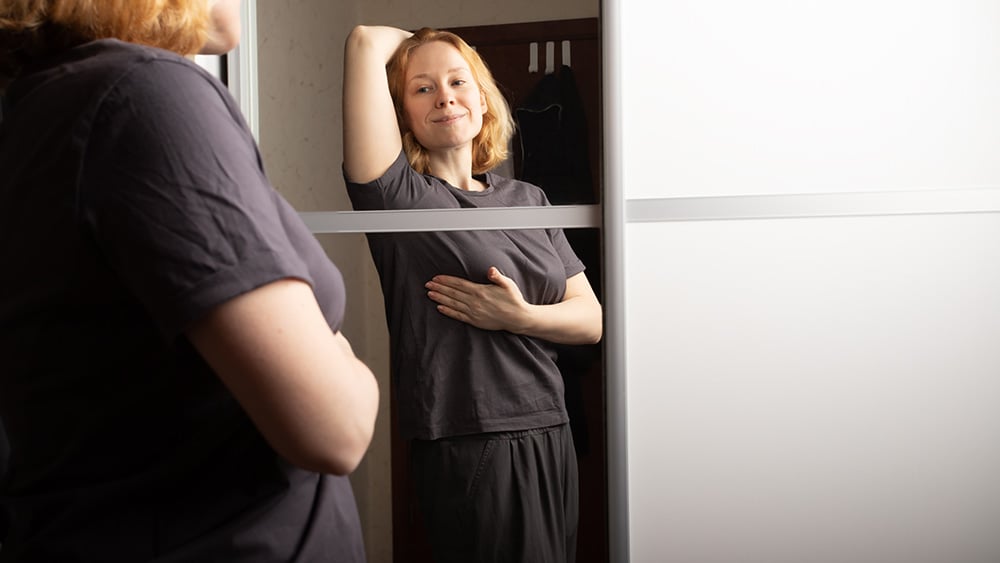
Instead, breast cancer experts encourage anyone with an average risk for breast cancer to be proactive with breast self-awareness, meaning they should know the normal appearance and feel of their breasts with the goal of noticing changes or potential problems in their breasts.
“Breast awareness is a more comprehensive knowledge of your body and self-examination is a component of that awareness,” Dr. Caldwell said.
Breast changes to look for and next steps
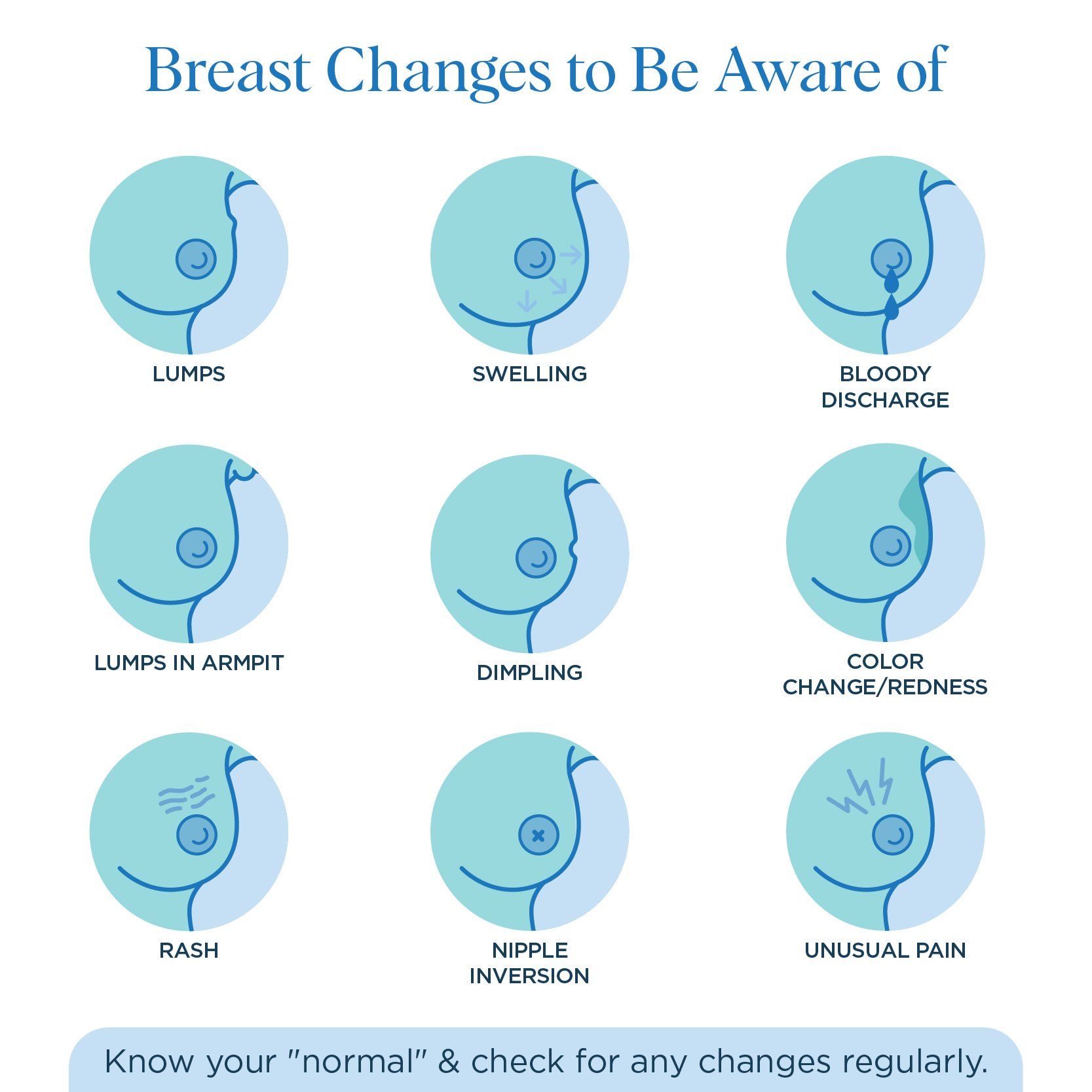
When looking at your breasts, physicians suggest looking for any:
- changes in size, shape, or color
- dimpling, puckering, thickening, or bulging skin
- nipple discharge (aside from breast milk for anyone who is breastfeeding)
- redness, soreness, rashes, or swelling
If you don’t see or feel anything different from the normal look and feel of your breasts, you can continue to follow up for routine clinical breast exams with your doctor and mammograms when recommended, usually starting around age 40.
However, patients who have other factors such as family history – like a mother who was diagnosed with breast cancer at age 45 – may need to start screening between age 30-35.
If you find something unusual, don’t panic. The majority of lumps found in the breast are benign, according to clinical research. Your next step should be to call your primary care provider, OBGYN, or Rochester Regional Health Breast Center, and schedule a thorough screening.
“These are the kinds of conversations you should be having with your providers,” Dr. Caldwell said. “Knowing what to do and when to be doing it relies on a provider knowing their patient’s family history and personal risk of developing breast cancer.”
Research in the journal Cancer shows more than 70 percent of women under the age of 50 who are diagnosed with breast cancer detect it themselves, so being self aware about breast health is in the best interest for both patients and providers.
“Breast cancer is the most common cancer in women these days; the earlier that the breast cancer is detected, the more likely it can be cured.” Dr. Caldwell said.

Related Articles