Key Takeaways
- Most skiing injuries are related to knee injuries, while snowboarders injure their wrists more often.
- Other common injuries for both skiers and snowboarders include leg, shoulder, and finger injuries, and concussions.
- If you get hurt, visit an orthopedic urgent care to be treated by an orthopedic specialist.
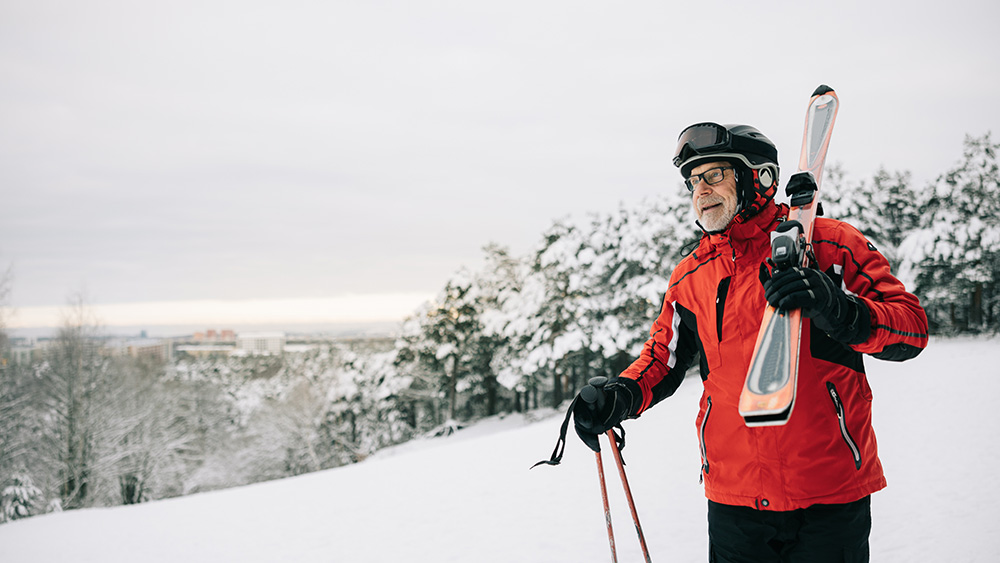
One of the joys of snowy winter weather is being able to hit the slopes and go skiing or snowboarding with friends and family.
“Skiing is one of the most in-the-moment things you can do,” said Stephen Rosenbloom, MD, an emergency medicine physician with Rochester Regional Health who is also on ski patrol at Bristol Mountain. “You can forget about everything else, and it can be the most relaxing thing in the world.”
Even with many ski resorts mandating helmet use and implementing other safety measures, injuries are still a common occurrence.
Dr. Rosenbloom explains some of the more common injuries suffered by skiers and snowboarders, and how to prevent them.
Common skiing or snowboarding injuries
Knee injuries
Anterior cruciate ligament (ACL) sprains and tears account for anywhere from 43-77 percent of all skiing related injuries, according to some estimates.
ACL injuries typically occur when someone stops, twists, or pivots quickly. It can also happen if the knee buckles backward. When too much stress is placed on the ligament in the center of your knee, it can cause it to tear. You may hear a popping sound and see swelling immediately.
An X-ray and MRI will confirm any ACL tear, which usually requires surgery to repair; recovery from this injury takes at least 6 months.
Leg fractures
Most broken legs happen when someone fractures their tibia (shinbone) while skiing or snowboarding. This will usually happen with a fall forward when someone is skiing too fast, sometimes on an icier surface.
Women and children are more likely to suffer a leg fracture than other skiers or snowboarders, according to surveys.
Most tibial fractures are treated by orthopedic specialists who set the bone and have the patient wear a cast for 6-8 weeks with physical therapy to supplement the healing process. If the fracture is serious, surgery may be needed.
Shoulder injuries
When you fall while skiing or snowboarding, landing on your shoulder can lead to a dislocation or fracture. One meta-analysis of nearly 750,000 ski and snowboard-related injuries showed shoulder injuries to be among the most common due to the impact of falling onto a hard surface while moving at higher speeds.
You will likely feel a pop or a snap, followed by swelling and pain in the affected shoulder. Visit an orthopedic urgent care or emergency department to stabilize your injured shoulder. This will likely involve a sling or other form of immobilization. Dislocation takes 1-4 weeks to heal, while shoulder fractures take at least 6 weeks and may involve surgery depending on the severity and location of the fracture.
Arm and wrist injuries
When you suddenly fall during a ski or snowboard run, most people’s first instinct is to put your hands out to catch yourself Unfortunately, this movement combined with falling at a fast speed can lead to arm and wrist sprains and fractures.
You may feel and hear a crack during a fracture. Sprains may feel like more of an initial sharp pull. For both injuries, swelling and bruising with pain usually follow over the next couple hours.
Sprains can be treated with rest, ice, compression, and elevation. If you think a fracture is possible, visit an urgent care for imaging. Fractures are treated according to their severity, which can range from immobilization in a sling or cast to surgery using pins and needles to repair bone damage. Recovery time ranges from 6-12 weeks.
Hand and finger injuries
When a skier crashes and holds onto their poles while falling, this can cause a sprain or break. Sometimes the thumb can be pulled in an awkward direction and strain the ulnar collateral ligament (UCL) that keeps the thumb from bending outward.
Like arm and wrist injuries, treatments may vary from being immobilized in a splint or cast to surgery. Depending on the severity of the injury, recovery can take 2-8 weeks.
Concussions
Due to the adoption of mandatory helmet use at most major ski resorts, the risk of concussions has dramatically dropped over the last 15-20 years. However, the risk still remains – especially for more advanced skiers who travel at higher speeds.
Symptoms of a concussion include:
- Dizziness
- Fatigue
- Feeling dazed
- Headache nausea
- Trouble concentrating
If you think you may have a concussion, you should seek treatment sooner than later. If concussions symptoms are not treated properly, they can linger.
Concussions are typically treated with rest, good quality sleep, reduced physical activity, and reduced screen time. A healthcare provider will be able to accurately diagnose a concussion, so visiting an orthopedic urgent care should be a priority.
Preventing injuries while skiing and snowboarding
Getting ready to go skiing is the same as any other sport. You want to enjoy what you’re doing without worrying about getting hurt. Take the time to prepare for it and you’ll reduce your risk of injury.
Learn to fall: If you are learning to ski or snowboard and can attend a lesson, take advantage of the opportunity so you learn to fall in a way that doesn’t risk injury.
Use the right equipment: Always wear a helmet when skiing and choose the correct sized equipment. Having boots that are too loose or skis that don’t fit correctly can lead to unsafe situations that might get you hurt.
Stretch out: Warming up your muscles before you head out prevents unnecessary strain or potential injury.
Avoid unnecessary risks: Be smart. If you’re a beginner, don’t choose a more advanced trail to go down. Take your time and know what you’re getting into before you get yourself into a situation that risks injury.
“If you are injured to the point where you need help, have a friend or someone you are with call for the ski patrol,” Dr. Rosenbloom said. “Try to stay off to the side so you avoid being hit by other skiers or snowboarders.”
If you do end up with a musculoskeletal or soft tissue injury, our orthopedic urgent care teams are available to treat any potential issue that may arise. With dedicated orthopedic specialists and the ability to take walk-in patients or scheduled visits, we’re here for you.
Explore Care For Patients Like You
Related Articles