Key Takeaways
- The 2025-2030 guidelines emphasize whole, minimally processed foods, but elevates red meat, full‑fat dairy, and saturated‑fat‑heavy foods.
- Most Americans already meet their daily protein needs. Fiber, which is crucial for disease prevention, receives little attention.
- Individualized nutrition and reliable, expert‑led public education are key to helping Americans eat healthy.
Every five years, the United States Department of Agriculture (USDA) updates its dietary guidelines to focus on the general population and how people should eat to be healthy.
In 1992, the USDA published its guidance in the visual form of the food pyramid. This was updated in 2011 to be My Plate, a representation of how people actually eat that is more visually appealing and easier to understand.
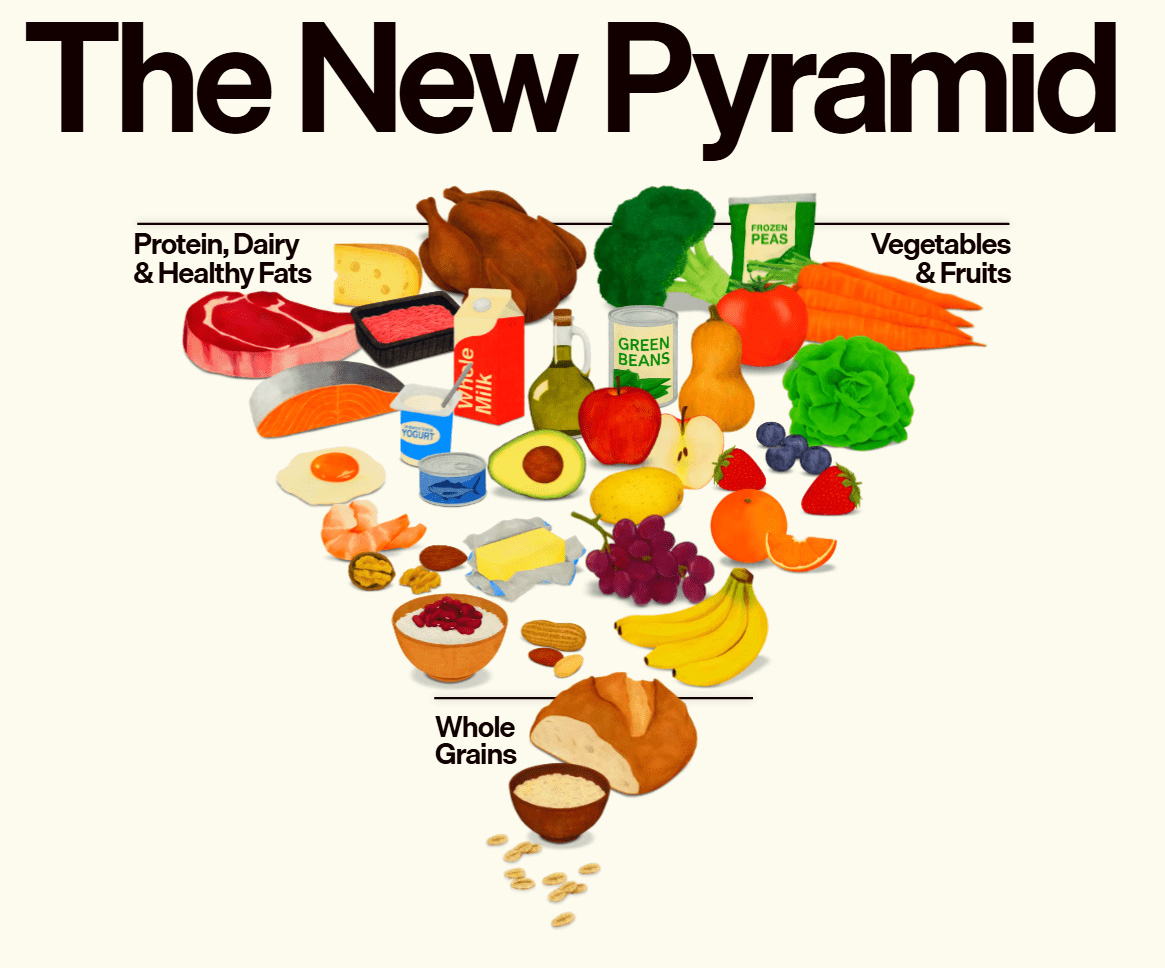
In 2026, the USDA reverted its guidance back to a pyramid but flipped it upside down. While much of the actual guidance remains the same, there are some key differences to understand.
We asked Grace Krizen, MS, RDN, CDN, a registered dietitian with Rochester Regional Health, to explain the USDA dietary guidance, what changes have been made compared to previous versions, and how following the guidance makes a difference in your overall health.
What has changed with the USDA dietary guidelines in 2026?
Overall, recommendations for most of the nutrition guidance remains the same, including:
- more whole foods/fewer processed foods
- more lean meats
- more whole grains
- focusing on healthy fats
“This is sound, uncontroversial, and aligned with decades of nutrition science,” Krizen said.
The most notable changes are centered around protein and saturated fats, but also alcohol consumption and gut health.
- Red meat, full-fat dairy, and butter or beef tallow are prioritized.
- Consuming less alcohol for better health overall is generally recommended.
- Protein recommendations are now increased to 1.2-1.6 g/kg per day.
- Gut health is mentioned, with a focus on fermented foods like kimchi and kefir.
“Most Americans have no problem reaching protein targets,” Krizen said. “Protein doesn’t need to be in popcorn, candy, or water. There are also limited plant-based sources of protein depicted on the pyramid.”
One part of daily nutrition missing from the new guidance is fiber intake. Approximately 90 percent of Americans are not getting enough fiber in their diet, according to researchers. While the new dietary guidelines discuss “high-fiber foods” as part of overall gut health, there is little information beyond that.
“Instead of focusing so strongly on protein, fiber and physical activity are two of the largest contenders in chronic disease prevention and management,” Krizen said.
Why different people eat different foods
The USDA dietary guidelines exist to provide direction on healthy eating to the majority of Americans across their lifespan. With that in mind, it is meant to be a foundation to build on, not a personalized nutrition plan.
People may eat differently for a variety of reasons, including:
- age
- preference or convenience
- food access
- cultures
- traditions
Look at the current dietary guidelines and your current eating habits, then think about how they line up. Most Americans are not following these guidelines, even though they know how to eat healthy. The challenging part is following through – especially because everyday life can get in the way and online misinformation may cause more confusion and harm than good.
“Registered dietitian nutritionists (RDN) are qualified and educated professionals who can teach the community about the importance of nutrition and how it can be applied to our daily lives,” Krizen said. “While browsing social media, I would encourage you to follow people who have the credentials of RD or RDN in their title.”
People with chronic diseases such as diabetes, kidney disease, or heart disease often benefit from working with a dietitian or specialized provider if they have specific dietary needs.
Where to start incorporating the USDA dietary guidelines into your diet
Looking for a good starting point? Like building a house, everything goes better when you have a solid foundation. Begin with small changes that prioritize the basics. Krizen encourages people to look at goals like these:
- Eat fruits and vegetables every day
- Drink enough water
- Eat three balanced meals
- Move your body
- Steer yourself away from too much salt and sugar
The idea of “eating a rainbow” is also a good way to focus your attention. This encourages variety in your diet, which introduces vitamins, minerals, and nutrients that help your body continue to function properly. Some examples of whole foods in different colors include:
- Orange: sweet potatoes, carrots, cantaloupe (good for your eyes)
- Purple: blackberries, purple cabbage, purple corn (reducing inflammation)
- White: turnips, cauliflower, pears (fighting off sickness)
Another way to improve your overall health with food is to choose a small, detailed, and achievable goal. For example: focusing more on choosing whole foods.
Start by swapping a cup of orange juice in the morning to eating an actual orange. Once you start to make that a daily habit then you could move onto something different.
Related Articles