

Key Takeaways
- Appendicitis usually starts as pain near the belly button that moves to the lower right side of the abdomen and gets worse over time.
- Other symptoms may include nausea, vomiting, fever, and not feeling hungry.
- Appendicitis is a medical emergency. People with appendicitis often need surgery to remove the appendix.
Whether you want virtual urgent care on demand, an urgent care location, or a primary care provider, we are here for you. Easily schedule appointments or find walk-in care when and where needed.
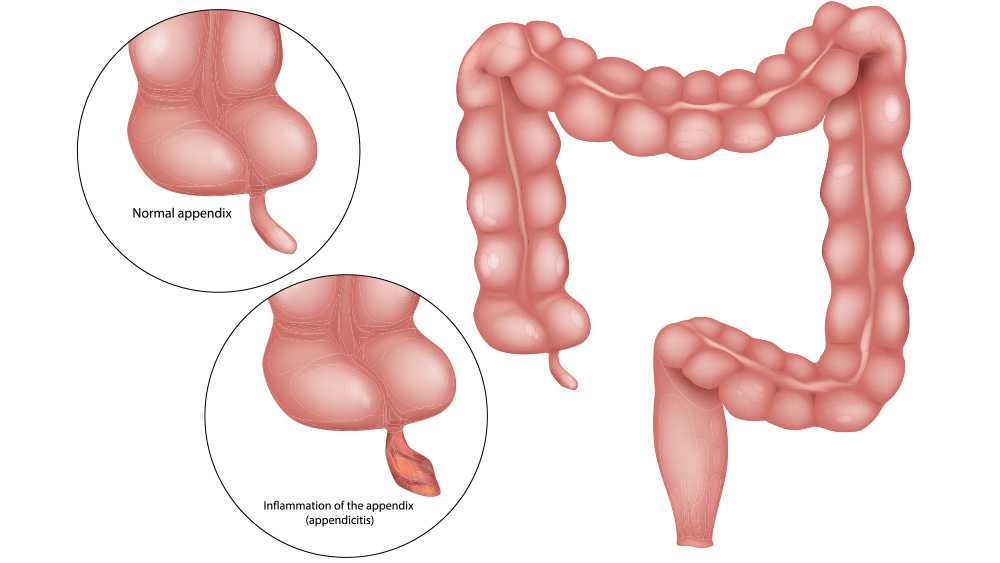
Appendicitis is a painful swelling or infection of your appendix, which is a small pouch attached to your large intestine on the lower right side of your abdomen.
When stomach pain grows stronger and doesn’t go away, it could be more than a simple stomachache. Appendicitis can get worse quickly and may require emergency treatment.
We asked Ingrid Watkins, MD, a family medicine physician at Rochester Regional Health First Family Medicine in Clifton Springs to explain more about appendicitis, including what causes it, early signs of an inflamed appendix, how it is diagnosed and how it is treated.
Where is your appendix located?
Your appendix is a small, tube-shaped pouch attached to the top of your large intestine. It sits in the lower right side of your abdomen, near your right hip bone.
The appendix is usually about 3 to 4 inches long and does not have an essential function, which means your body can work normally without it.
Causes of appendicitis
Appendicitis usually happens when something blocks the inside of the appendix. Blockages might stem from:
- Hardened stool
- Infections in the digestive tract
- Bacteria inside the appendix
The blockage causes pressure and swelling on the appendix, which eventually leads to an infection. If untreated, the appendix can burst, which is very painful and can potentially spread infection throughout the abdomen.
Early symptoms of appendicitis
Appendicitis symptoms follow a pattern in most people.
The first sign is typically pain that starts near your belly button and moves down to your lower right abdomen.
People with this pain may also experience:
- Pain that gets worse with coughing, moving around, or walking
- Losing your appetite
- Nausea and vomiting
- Fever
As the appendix becomes more inflamed, symptoms may become more severe. These include:
- Abdominal bloating or swelling
- Constipation or diarrhea
- Trouble passing gas
Not everyone will have the same symptoms, but these are some of the most common ones.
Signs of appendicitis in children
Appendicitis can look a little different in children, especially younger ones. Common signs in kids are similar to those in adults, starting with abdominal pain that gradually gets worse and shifts from the belly button to the lower right abdomen.
Young children often have trouble describing their symptoms and may seem unusually tired or irritable.
Research suggests a jump test helps to determine if a child needs urgent medical treatment. The child jumps straight up with both hands raised above their head. If they show signs of pain while jumping, studies suggest appendicitis may be likely.
Stomachache vs. appendicitis
Telling the difference between a normal stomachache and appendicitis can be challenging. Both stomachaches and appendicitis may come with nausea or vomiting. The most significant symptom to follow is whether the pain becomes worse over time.
A typical stomachache comes and goes and improves with rest or time. It might be linked to stress or other viral symptoms like muscle aches or headaches.
Appendicitis pain gets worse over time, becoming more severe and moving to the lower right abdomen.
If pain is getting worse instead of better, it’s important to get checked right away.
Diagnosing appendicitis
To diagnose appendicitis, a healthcare provider will ask about any symptoms and medical history and perform a physical exam to check for a tender abdomen.
If further examination is needed, a provider may order tests or imaging to rule out other conditions. This may include blood or urine tests, or an ultrasound or CT scan.
When to seek treatment for appendicitis
An inflamed or burst appendix is a medical emergency. If left untreated, serious and potentially life-threatening complications can develop.
If someone is diagnosed with appendicitis, they will usually undergo surgery to remove the appendix. This is also called an appendectomy. If an infection is suspected, antibiotics may be prescribed.

Related Articles