
Key Takeaways
- A prolapsed bladder drops down into the vagina when pelvic floor muscles are too weak.
- Pelvic physical therapy can help to strengthen and lengthen pelvic floor muscles, which provides more support for the bladder and other organs.
- If physical therapy is unsuccessful, there are several types of minimally invasive surgery that can help with bladder prolapse.
Our women’s health team is experienced in providing compassionate, understanding care that goes beyond just diagnosing and treating. We offer a full range of women’s health services to help you maintain a lifetime of good health and well-being, working as your partner to provide personalized care at every step along the way.
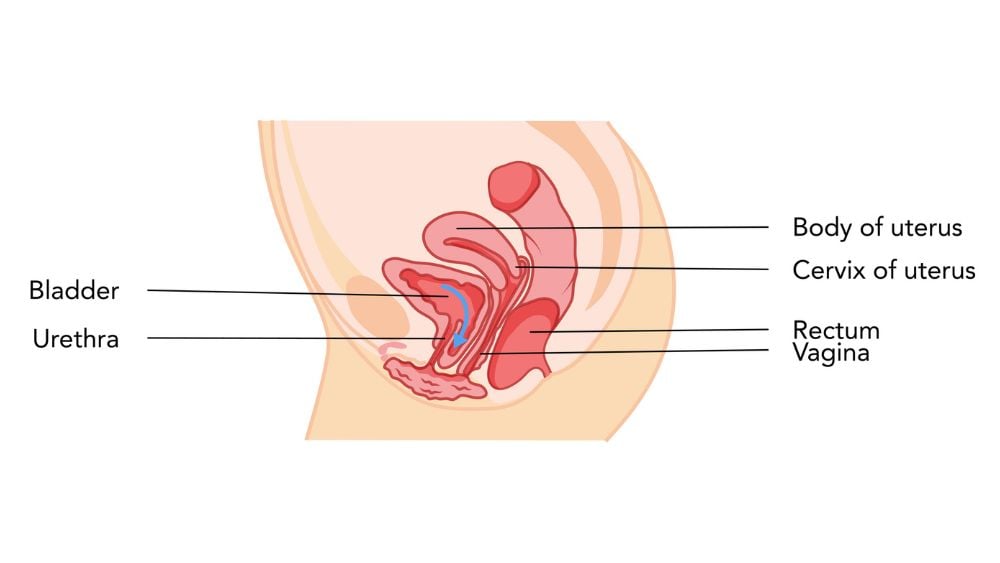
Bladder prolapse, also called cystocele, happens when the bladder drops down and protrudes from the vagina because the pelvic floor muscles are too weak or contracted.
According to the National Institutes of Health, bladder prolapse is the most common pelvic organ prolapse that happens to women. Experts report nearly half of all women in the U.S. experience pelvic organ prolapse in their lifetime.
The pelvic floor muscles sit like a hammock in the bottom of your pelvis to provide support and bowel control.
We talked with Muhammed Qureshi, MD, FACOG, URPS, a urogynecologist at our Clinton Crossings office, and Anees Fazili, MD, a urologist at Rochester General Hospital. Both doctors regularly see patients who experience bladder prolapse. They explain what causes a bladder to prolapse, how to recognize the signs of it, and what treatment options are available to get patients to regular life.
Who is at risk of bladder prolapse?
Giving birth to a child vaginally is the top risk factor in bladder prolapse and pelvic organ prolapse in general.
Other factors that play a role in having an increased risk of pelvic organ prolapse include:
- Family history
- Previous pelvic surgeries
- Women with a generally weakened pelvic floor
Noticing early signs of bladder prolapse
Most often, there are no obvious warning signs of a prolapsed bladder. The first indication that something is off is when they feel a bulge in their vagina. This is often noticed in the shower or when sitting down.
Sometimes other symptoms bring a patient to their OB/GYN, including incontinence.
“Mostly patients are worried about incontinence,” Dr. Qureshi said. “I cannot hold urine, or any time I cough or sneeze, I start to start leak urine involuntarily.”
Other potential symptoms that may suggest a bladder prolapse include:
- being unable to fully empty the bladder
- increased pelvic pressure
- pain during or after sex
- UTIs
“This can happen at any age for women,” Dr. Fazili said.
Treatments for bladder prolapse
Visiting your OB/GYN or primary care provider is the best way to confirm if your bladder or another pelvic organ prolapsed.
After a physical and pelvic exam, they will be able to determine what stage the prolapse is in.
- Stage 0: No prolapse
- Stage 1: Minimal prolapse
- Stage 2: Moderate prolapse
- Stage 3: Advanced prolapse
- Stage 4: Organ has completely prolapsed
Based on a variety of factors, your OB/GYN provider will work with you to create a personalized treatment plan, which may include non-surgical and/or surgical options.
Non-surgical treatments
Pelvic physical therapy exercises have a strong success rate at improving the stability of your pelvic floor muscles. Your OB/GYN can recommend certified pelvic physical therapists through the Pelvic Health Center at Rochester Regional Health to demonstrate the exercises and stretches that are best suited for you.
Using a pessary has also proven to be helpful for many patients who have a prolapsed bladder. This device is inserted into the vagina to hold the prolapsed bladder in its place. These are typically rubber or plastic and are cleaned every few months at an OB/GYN’s office.
Surgical treatments
Urogynecologic and urology surgeons offer several minimally invasive procedures to help restore the bladder to its original place.
These surgeries include:
- Anterior vaginal repair (bladder is pushed up and connective tissue between bladder and vagina are secured)
- Colpocleisis (vaginal obliterative surgery to close the vaginal canal entirely)
- Sacrocolpopexy – with mesh OR without mesh (using autologous/the patient’s own natural tissue)
Rochester Regional Health is the only healthcare provider in the greater Rochester and Finger Lakes region offering non-mesh native tissue repair.
If you have stress incontinence, it can be corrected at the same time with a minimally invasive sling surgery, which creates a hammock-like support created for the pelvic organs.
“There is always a way to fix these issues,” Dr. Fazili said. “With most procedures, people typically go home on the same day of their surgery. If you are bothered by a prolapse, there is a solution. It all depends on what is the right fit for you. The decision is up to you.”
“Maintaining a healthy lifestyle can help to relieve symptoms,” Dr. Qureshi said. “This means regular exercise, eating healthy, and maintaining a healthy weight. If someone has surgery for a bladder or other pelvic organ prolapse, that healthy lifestyle will also be helpful moving their recovery forward.”


Related Articles