
Key Takeaways
- Endometriosis is a painful disorder where tissue that usually grows in the uterus grows in areas outside of the uterus.
- Pain that worsens during menstrual periods is common, along with pain during sex, pain while urinating, infertility, pain with bowel movements, and other symptoms.
- Plenty of treatment options are available, including medical and surgical treatments like minimally invasive laparoscopy and other multidisciplinary treatments.
Our care team is experienced in providing compassionate, understanding care that goes beyond just diagnosing and treating. We offer a full range of women’s health services to help you maintain a lifetime of good health and well-being, working as your partner to provide personalized care at every step along the way.
Endometriosis is a chronic disorder that affects 1 in 10 women during their reproductive years. From mild pain to infertility, the disorder has a range of symptoms and can impact every person differently.
Endometriosis is a chronic disorder in which we find tissue that normally grows in the uterus – endometrium – growing in areas outside of the uterus. This tissue is called endometriosis. Most commonly, the tissue affects the ovaries, fallopian tubes, and the tissue lining the pelvis.
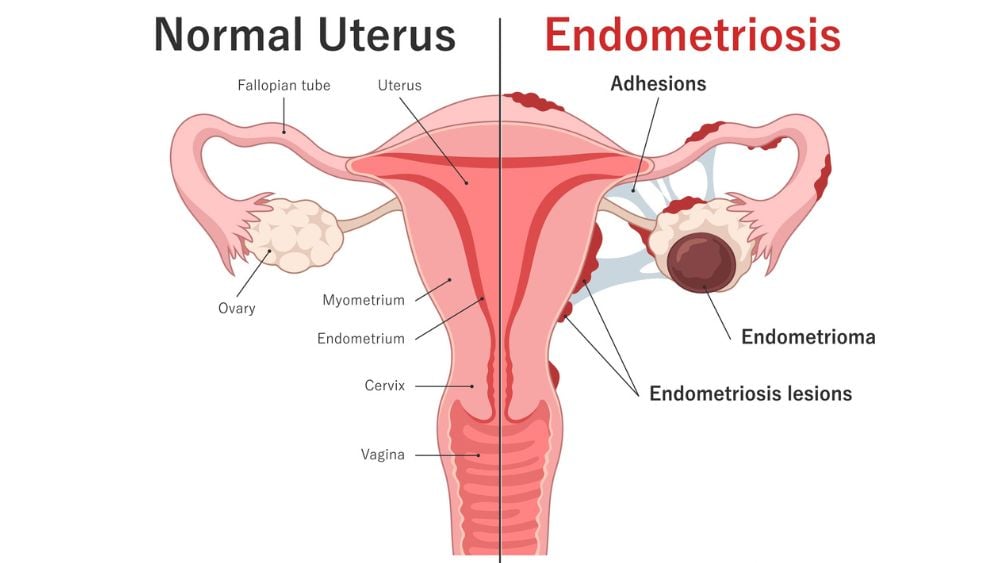
“On rare occasions, the endometrium tissue can grow beyond organs in the pelvic region and affect other areas of the body,” said Olivia Higgins, MD, a minimally invasive gynecologic specialist and Medical Director of Gynecology at Rochester General Hospital.
Symptoms of endometriosis
The most common symptom of endometriosis is pelvic pain that tends to worsen during menstrual periods. Although pain is common during periods, people with endometriosis often experience pain far worse than normal.
Other symptoms of endometriosis include:
- pain during sex
- pain while using the bathroom
- excessive menstrual bleeding
- infertility
- fatigue
- diarrhea
- constipation
- bloating or nausea
“Often, if a person planning to become pregnant is diagnosed with endometriosis, physicians will recommend that they do not delay having children because the condition may worsen over time. However, this is not the only option for treatment or not desired for many individuals.” Dr. Higgins said.
How does a doctor diagnose endometriosis?
If a patient describes symptoms of endometriosis, there are a few tests to check for physical clues of endometriosis:
Pelvic exam: Usually performed at an annual well-woman’s exam, a doctor will check for abnormalities in the pelvic area.
Ultrasound: Using an imaging technique, a doctor will examine the patient’s reproductive organs to look for abnormalities that signal endometriosis.
MRI: Magnetic resonance imaging (MRI) can determine detailed information about the endometriosis, including the location and size.
Laparoscopy: Conducted by a surgeon, laparoscopy allows a detailed examination of the abdomen area, providing the most detailed information about the endometriosis. During this exam, a patient is placed under general anesthesia.
“During laparoscopy, a surgeon may be able to also treat the endometriosis by removing the endometriosis tissue,” Dr. Higgins said.
Is there a cure for endometriosis?
While there is a possibility that endometriosis may not completely go away, there are treatments to reduce pain and treatment symptoms.
Hormonal therapy
The first line of treatment, hormones are sometimes effective in reducing or eliminating the pain of endometriosis.
“We aim to suppress the estrogen that stimulates the endometriosis tissue,” Dr. Higgins said. “This can be done with multiple hormones in many different forms, such as pills or injections.”
Conservative surgery
For people who are trying to become pregnant or do not see improvements after hormonal therapy, conservative surgery is the next step. In surgery, the endometriosis tissue can be removed while preserving your uterus and ovaries, if desired.
“This surgery is a good way to remove endometriosis; however, patients should know that there is a possibility of the endometriosis tissue returning,” Dr. Higgins said.
Hysterectomy
Another option for patients with endometriosis is a hysterectomy (removal of the uterus), with or without the removal of the ovaries. It is important to discuss with your doctor the difference between the types of hysterectomies. Removal of the ovaries specifically can cause early menopause, which may have long-term effects on health.
“We cater the surgical approach to fit the patients’ health needs and personal desires. We know the risk of recurrence is reduced with a hysterectomy (with or without removal of the ovaries), but if patients are not ready for this intervention, we have alternative strategies for treatment,” Dr. Higgins said.
Importance of annual well-woman’s exams
During an annual well-woman’s exam, a physician will check-up on many different aspects of the patient’s health, one of which being their reproductive system.
When examining the pelvic and abdominal area, a doctor can determine whether signs of endometriosis exist. This way, treatment can begin as early as possible, reducing the likelihood of long-term effects like chronic pain syndrome or cancer. Please discuss with your doctor your symptoms, so they can schedule necessary testing and follow ups, outside of the annual visit.
“Early detection and treatment of endometriosis are very important in avoiding chronic pain syndrome - a syndrome that affects the brain and spinal cord, causing an increased perception of pain, as well as reducing the impact of the disease on fertility or quality of life,” Dr. Higgins said.

Related Articles