Key Takeaways
- Sprains and breaks both have pain, swelling, and bruising pretty early on.
- Breaks and fractures typically involve more difficulty bearing weight compared to a sprain.
- The best first step to take if you are worried about either a break or sprain is to visit an orthopedic urgent care.
Our Orthopedic Urgent Care centers in Victor and Henrietta offer same-day treatment for unexpected injuries involving bones, joints, and muscles. With convenient walk-in hours available during the day, evenings, and Saturdays, we’re here when you need us most.
You’re cruising along with your day – playing a sport with friends, exercising on your own, or simply being active – when suddenly something goes wrong. You hear a pop and feel pain.
So what happens next? How do you tell if you sprained a ligament or broke a bone?
Matthew Nagelschmidt, MD, is a sports medicine physician with RRH Orthopedics and explains the differences between a fracture and a sprain, what to do immediately afterward, and what healing and recovery might look like depending on the injury.
Sprain: Diagnosis and treatment
A sprain is an injury to a ligament – the tissue that connects two bones – that has been stretched beyond its typical range of motion.
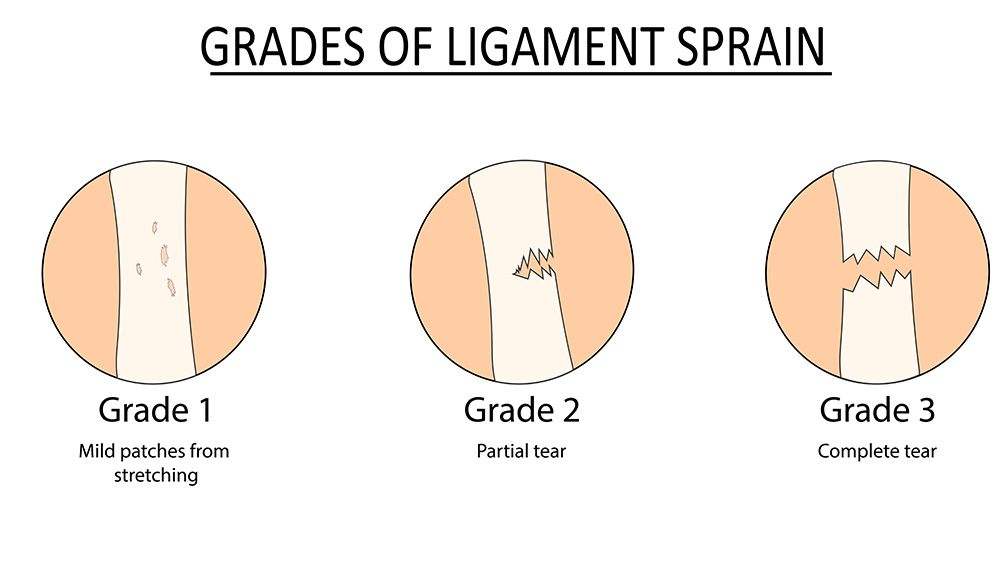
Sprains are most common with ligaments that support weight-bearing joints that are used frequently like ankles and knees.
“Some people can over invert or roll their ankle beyond its normal limit,” Dr. Nagelschmidt said. “It can also be an overuse injury.”
Symptoms
Signs of a sprain include:
- swelling
- pain to the touch
- bruising
- weakness and spasm
- cramping
- feeling/hearing a “pop”
Treatment and recovery
Sprains slowly get better within 1-3 days. Pain and swelling will start to lessen in the days and weeks following the initial injury.
Staying mobile early is important in treating sprains. Providers will use a brace or wrap to offer support for the injured ligament while still allowing for movement so you don’t lose your range of motion. Physical therapy can give you exercises to strengthen the ligament while you heal.
Acetaminophen (Tylenol) or Ibuprofen are recommended for pain management.
Overall, the average recovery time for a sprain is about 3-4 weeks.
Fractures: Diagnosis and treatment
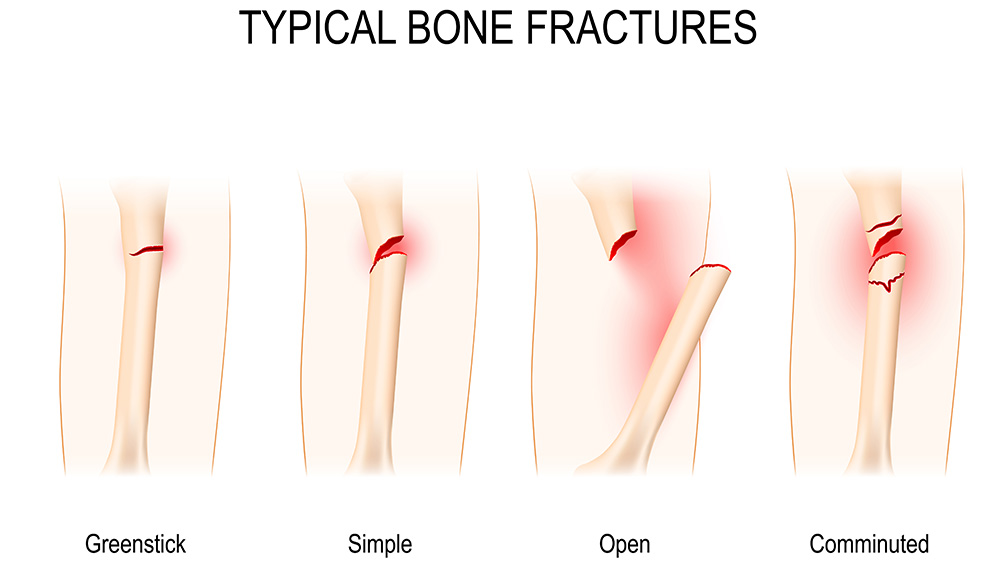
A fracture is when a bone breaks. Fractures range from tiny partial cracks to full, clean breaks of the bone.
Symptoms
Signs of a fracture look similar to a sprain, such as:
- swelling
- pain
- bruising
- feeling/hearing a “pop” or crack
The main differences to look for with fractures compared to sprains is a deformity – one body part may not look like the other one. Whether you are comparing ankles, knees, wrists, or other bones, this is a basic way to tell a sprain from a fracture.
A person with a fracture will also have more difficulty bearing weight compared to a sprain and have a more limited range of motion.
Treatment and recovery
Once a fracture is confirmed with imaging, a provider will immobilize the broken bone to hold it in place and allow it to heal. This is typically done with a splint, cast, or walking boot, depending on the injured bone.
Some fractures might require surgery if the injury is severe, (i.e., ruptured tissue or blood vessels, bones not in line after break). Orthopedic surgeons use screws and/or rods to hold a bone in place so it can heal properly.
Pain and swelling can be reduced by taking acetaminophen (Tylenol) or Ibuprofen.
Once the injured bone has healed enough, starting physical therapy becomes very important to future injury prevention.
“Engaging in physical therapy is vital to strengthening the muscles and ligaments around a fractured bone,” Dr. Nagelschmidt said.
Fractures typically take 8-12 weeks to heal.
“If you’re on the fence about an injury being a sprain or a fracture, you can manage it with the RICE method – rest, ice, compression, and elevation – for a few days if there is only swelling and you can put weight on it,” Dr. Nagelschmidt said. “If your pain is not coming down, there’s numbness or tingling, you have limited motion, and you’re having trouble bearing weight, head to an orthopedic urgent care.”
Sprains and fractures in children
Often with children, their bones aren’t fully developed yet. This can lead to a ‘green stick fracture’ – an occurrence where the bones almost bend.
Without an obvious deformity, an orthopedic provider will put the child in a cast, splint, or brace. This allows them to limit the motion of the injured area while encouraging rest and reduced swelling in the early stages of recovery until a follow-up can be scheduled with an orthopedic specialist to determine the most appropriate next steps.
“Sometimes it may be hard to tell the difference between a fracture and sprain in the early stages. If you’re worried about it, the best way to get a good first evaluation is to go to an urgent care,” Dr. Nagelschmidt said.

Related Articles