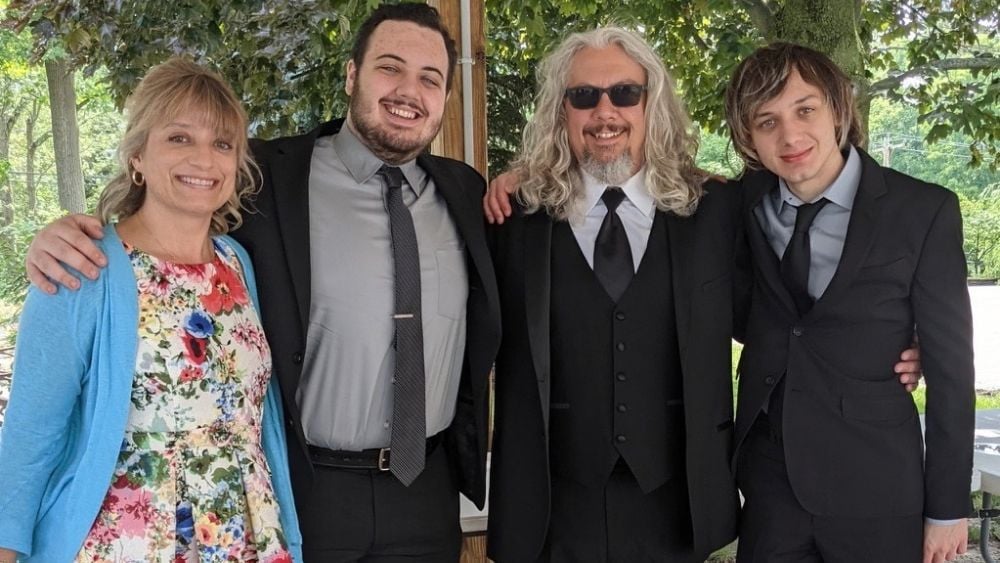
Two seems to be Janis Becker’s number.
Janis and her husband Stephen have two dogs at their home. The pair are parents to two adult children, as well.
After a career as an engineer, Janis left her job to raise her sons until they went into grade school. She then returned to the working world with career number two: an eighth-grade science teacher with the Wayne Central School District.
“The world needs more teachers,” Janis said.
With her two children, two dogs, and a second career, what Janis was not expecting was a life-altering health diagnosis - let alone two.
An early breast cancer diagnosis
Janis’ journey began in 2005 at an annual wellness visit with her primary care provider. Her doctor suggested she undergo a baseline mammogram. She had the mammogram done, the scan was clear, and she went on with everyday life.
Three years later, Janis was in the shower when she felt a lump under her left arm. She kept track of it regularly, then told her primary care provider about it after the lump continued to grow over the next couple months.
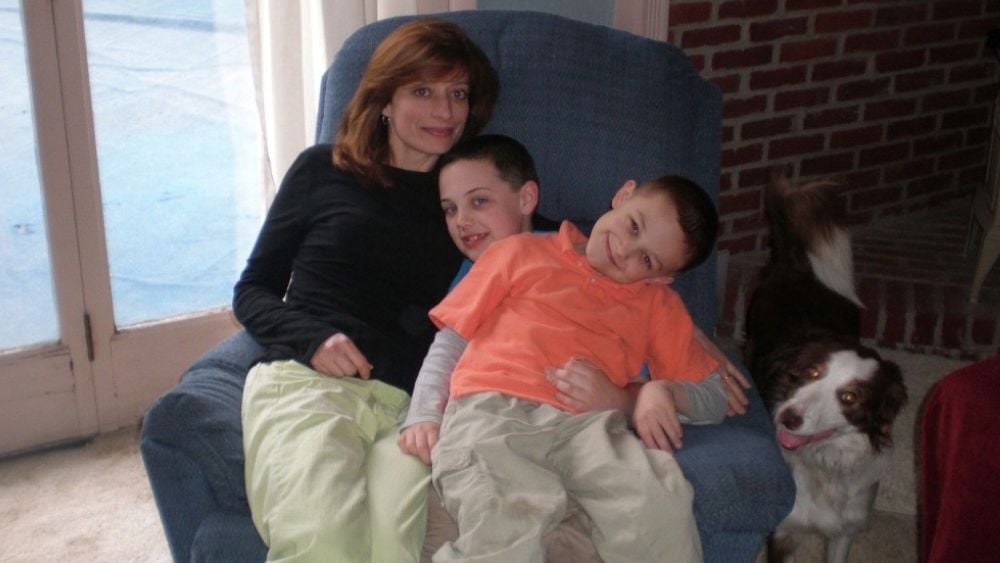 Janis Becker with her sons in 2008.
A series of screenings and tests revealed Janis had triple negative breast cancer – a particularly aggressive form of breast cancer that tends to grow and spread more quickly than most other types of breast cancer. Triple breast cancer presents at a later stage and potentially requires more aggressive treatment.
Only 38 years old at the time, Janis was stunned.
“I had no family history of breast cancer,” Janis said. “I ate relatively healthy, I had a healthy, active lifestyle, and no risk factors.”
Choosing Lipson Cancer Institute for breast cancer treatment
Breast cancer screening and treatment has evolved significantly over the last 20-25 years. Back when Janis was diagnosed in spring 2008, she said she felt like a breast cancer diagnosis was a heavy weight with a poor outcome. With her sons in 1st and 2nd grade at the time, all she could think about was they might grow up without her – a feeling that she described as “the worst feeling in the world.”
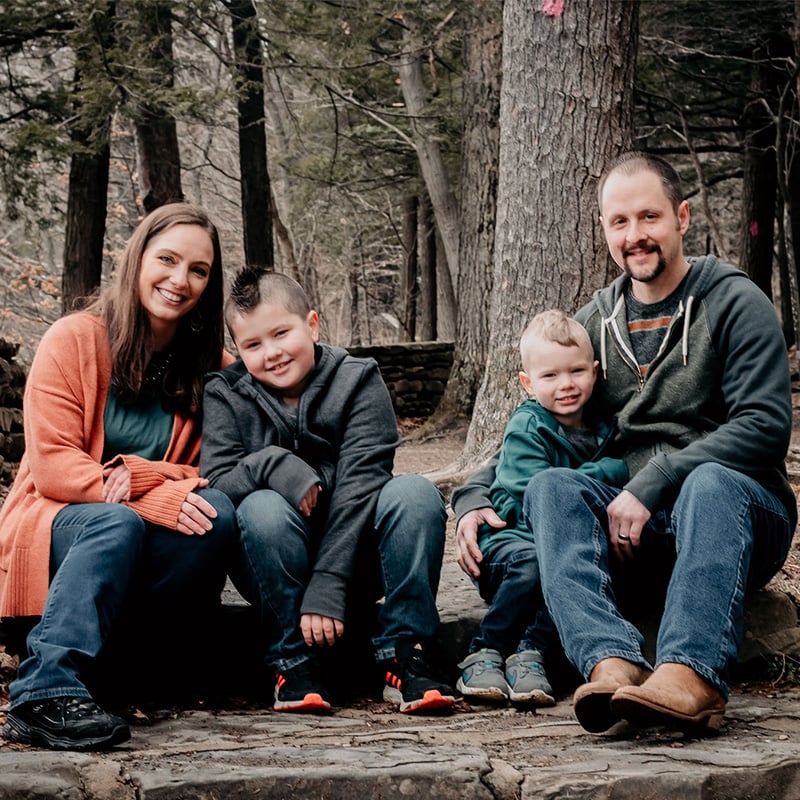
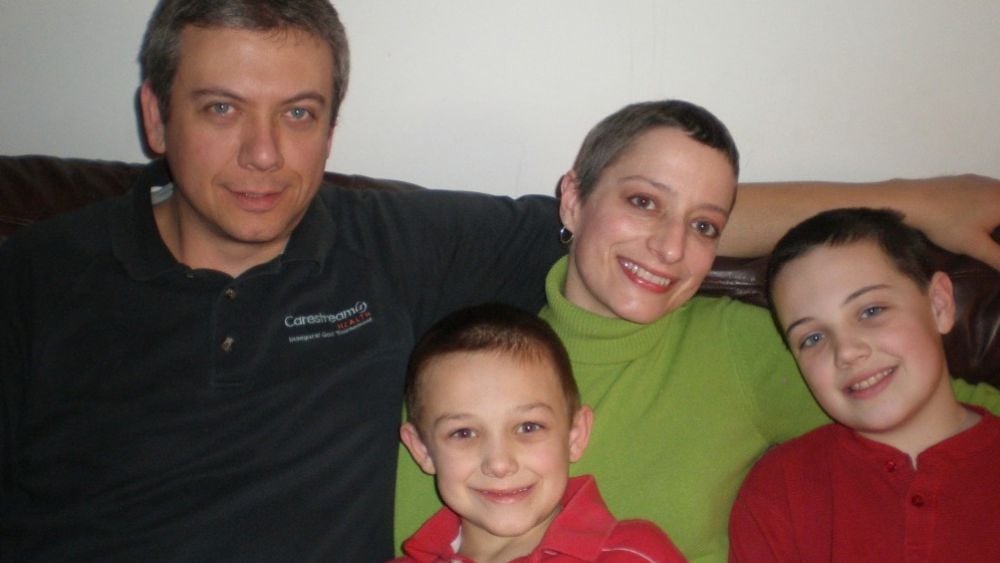 Stephen and Janis Becker with their sons in 2008 during Janis' cancer treatment.
Janis was referred to the cancer care team at Lipson Cancer Institute. Together, they decided she would receive six months of neoadjuvant chemotherapy – chemotherapy before surgery – using Adriamycin (doxorubicin), docetaxel, and cyclophosphamide before undergoing a lumpectomy to remove the tumor and several lymph nodes that were also positive for breast cancer. Following the surgery, Janis underwent five weeks of radiation.
The chemotherapy drugs used in Janis’ treatment plan can have severe side effects for some patients; cancer survivors have nicknamed doxorubicin “the red devil” because of its red hue and nasty side effects. Severe nausea and fatigue hit Janis hard. Her body entered premature menopause. It was a long six months.
Through this time, family and friends showed up continuously for Janis. Her husband took over cooking and cleaning the house, taking their sons on road trips to visit family so she could have time to rest at home. Her mother and sisters visited her often and helped to care for her as best as they could. The community stepped in in unexpected ways, as well.
“Parents of my kids’ classmates would come over with casseroles or bring the boys on play dates, taking them to the zoo or other places,” Janis said.
“This is not a rare disease. This is something a lot of people have experienced. For that reason, other people know when it’s time to step in and help someone in a time of need.”
At the end of 2008, scans showed there was no cancer remaining in Janis’ body.
“Everyone was fabulous through the whole journey,” Janis said. “Every receptionist, the entire oncology team, surgical team, radiology team, all of the nurses and nurse practitioners – everyone was so supportive.”
Continuing to care for Janis in survivorship
Studies show patients with triple negative breast cancer are more likely to have cancer return in their bodies – called recurrence – within five years of their initial diagnosis. As a result, triple negative breast cancer survivors have more frequent screenings through mammograms and MRIs to ensure any potential signs of cancer are detected early. These frequent check-ins continue for at least five years; data shows triple negative breast cancer survivors who live for five years after their treatment have a much lower risk of recurrence.
“Once you hit the 5-year mark of being cancer free, that’s a celebration,” Janis said. “It’s the greatest feeling in the world.”
Navigating breast cancer can be overwhelming, but you don’t have to do it alone. From the day you are diagnosed through survivorship and beyond, we are here to support you and guide you through every decision to help you heal.
At Lipson Cancer Institute, the oncology and social work teams caring for Janis took a proactive and vigilant approach on her behalf. Follow-up appointments for both cancer screenings and side effects of cancer treatments became a regular part of Janis’ life.
The check-ins became a support network for Janis, especially because of the long-term side effects from chemotherapy. Nurses and other people on her cancer care team helped her through hot flashes and sleep disruption linked to her premature menopause years after her treatment ended.
“It was amazing that the whole team was sensitive to those effects,” Janis said.
Walking down a familiar path
Over the next decade, Janis settled into her new normal. She went to regular checkups and screenings but put her breast cancer journey to rest in her mind.
“I thought of it as a rough time in my life, but something I got through,” Janis said. “I thought to myself, ‘Let’s enjoy our kids and our dogs and our family.’ Our kids grew up and went to college, and we enjoyed our family and our hobbies.”
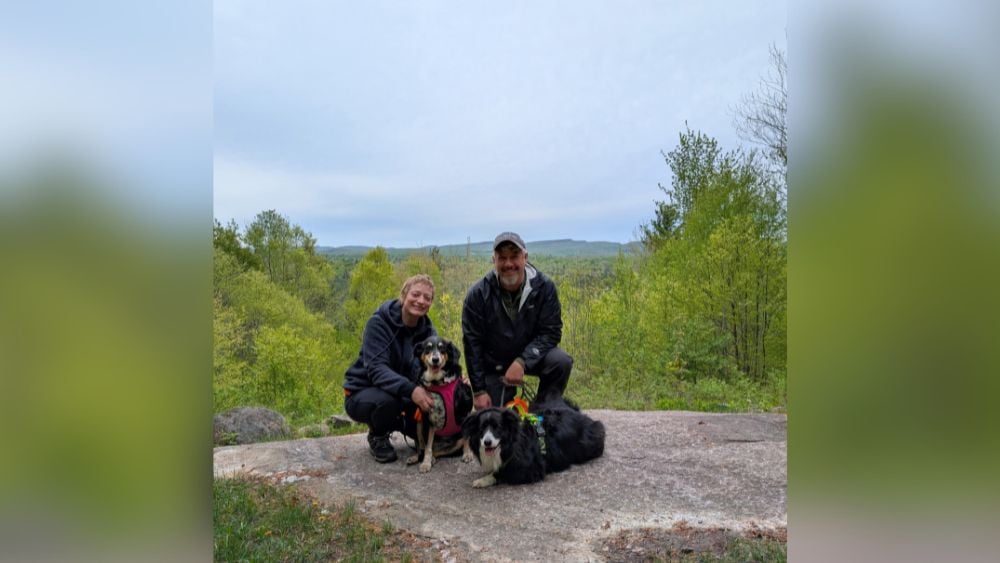 Janis and Stephen Becker hiking with their dogs in the Adirondack Mountains in 2025.
Janis progressed in her career as a science teacher. Her oldest son graduated from high school, then her younger son. Five years became ten years, which quickly became 15 years and suddenly, it was 2025.
Over the summer months, Janis went in for a routine mammogram and was told that the imaging in her right breast looked suspicious, so they needed her to come back for additional screening. Breast cancer experts agree that patients with dense breasts often have suspicious or inconclusive areas on their scans turn out to be benign; Janis knew this too and didn’t think twice about it.
Once again, Janis went through a series of screenings and biopsies. When her results came back positive for a new primary diagnosis of triple negative breast cancer with positive lymph nodes, she was stunned.
“Lightning doesn’t strike twice, right?,” Janis said. “That felt like someone punched me in the gut because I knew the rough road that I was facing. I also knew I had a core of strength because I had done it before. But I was still terrified.”
An experienced cancer care team with new treatments
As Janis met with her medical, radiation, and surgical oncology teams, something began to dawn on her: things would be different this time around – for the better.
“The treatments for breast cancer and treatments for the side effects are so much better now compared to 2008,” Janis said.
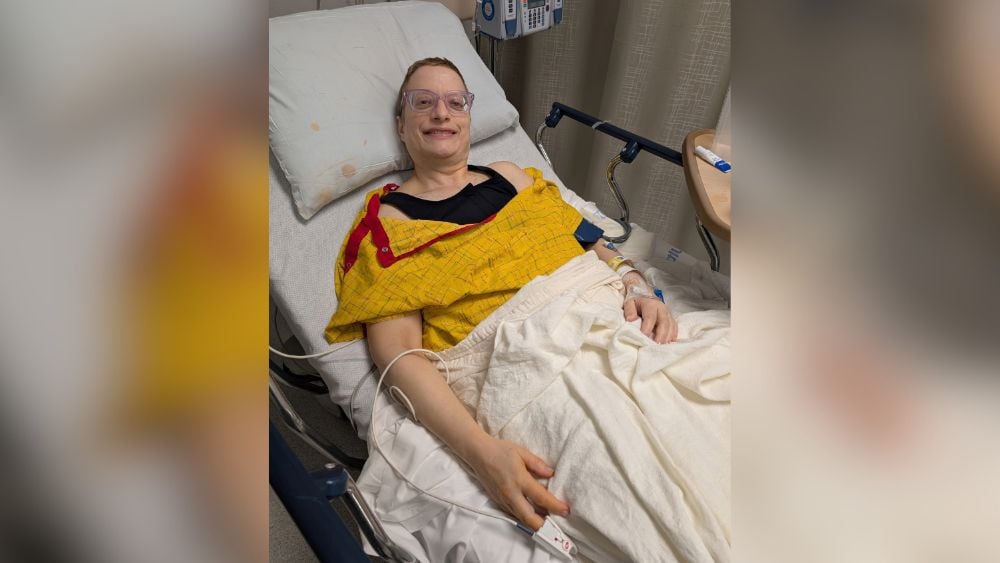 Janis Becker receiving treatment for her second triple negative breast cancer diagnosis in 2025.
With Amy Bodrog, MD, as her medical oncologist, Sheema Chawla, MD, DipACLM, as her radiation oncologist, and Kelly Krupa, MD, as her surgical oncologist, Janis felt confident in her treatment plan for this second triple negative breast cancer diagnosis.
Her cancer care team knew Janis had a tumor in her breast, as well as a positive lymph node under her armpit. This made her a candidate for undergoing neoadjuvant chemotherapy – chemotherapy first, then surgery to remove any tissue and lymph nodes with remaining cancer cells.
“In Janis’ case, the plan for upfront chemotherapy was decided because we knew she would have a better overall outcome per clinical trial and research data,” Dr. Krupa said.
From September 2025 until February 2026, Janis went through six months of neoadjuvant chemotherapy, followed by a double mastectomy at Unity Hospital in March. After surgery, she had three weeks of radiation therapy at Rochester General Hospital that ended in early July.
Everyone was wonderful at the Lipson Cancer Institute. I knew I did not have to go to Buffalo, Boston, or New York City to get the absolute best care. I could do it just a few minutes from my house.Janis Becker, Two-Time Breast Cancer Survivor
During her first cancer treatment in 2008, Janis’ treatment plan included doxorubicin – the “red devil”. The human body can only endure a certain amount of doxorubicin over the course of a lifetime before heart damage such as heart failure starts to become a concern.
“This time, we based [Janis’] therapy on newer regimens that include and incorporate immunotherapy with chemotherapy,” Dr. Bodrog said. “It’s a heavy regimen that is usually four chemotherapies and immune therapy; we did this one without the doxorubicin.”
“She didn’t have heart failure yet, but she could have developed it if we used that particular medication again.”
Without the doxorubicin as part of her treatment regimen, Janis noticed her body didn’t experience as many severe side effects as it did 18 years earlier.
“This time, the nausea wasn’t debilitating and I didn’t go through menopause, so it felt almost easier,” Janis said.
Having gone through everything once before, Janis knew what to expect with her treatments and what her body would be going through. Throughout the process, her cancer care team also made sure she was aware of any potential side effects – and helped her treat them as early as possible.
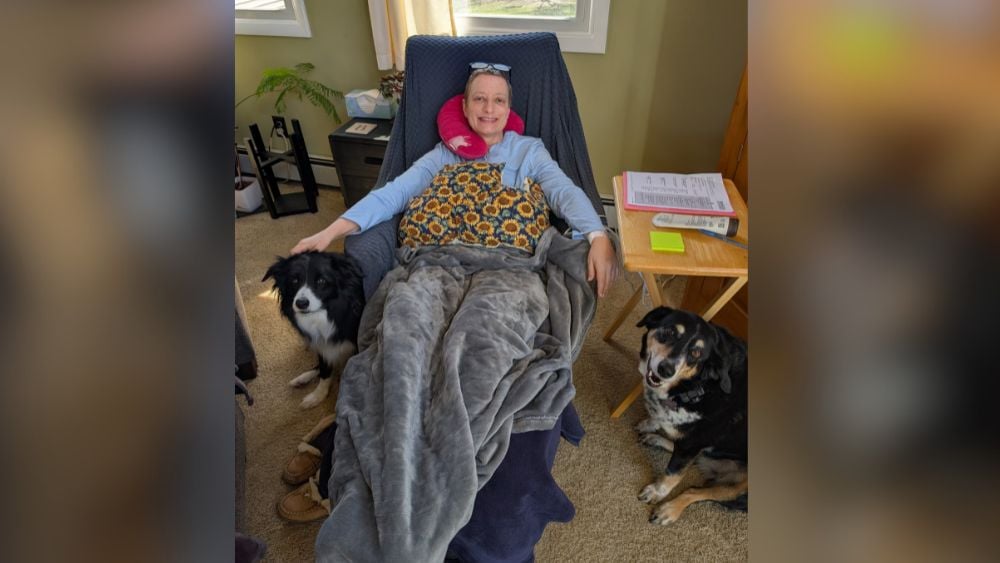 Janis Becker recovering from cancer treatment at home with her dogs in 2025.
“So much of the terror of cancer and cancer treatments is the fear of the unknown, but my oncology team always kept me informed.”
Still, with a new diagnosis came new challenges. The first series of cancer treatments in 2008 had depleted Janis’ immune system, so she needed to undergo immunotherapy infusion sessions every three weeks for one year.
“One medicine that I wish could prescribe for my patients is a positive attitude,” Dr. Bodrog said. “Janis just overflows with that.”
As Janis came in for her final treatments, she decided she was going to make herself look like the warrior she wanted to be. She showed up to her appointment wearing a Viking hat, complete with braids that flowed down the side of her recently shaved head.
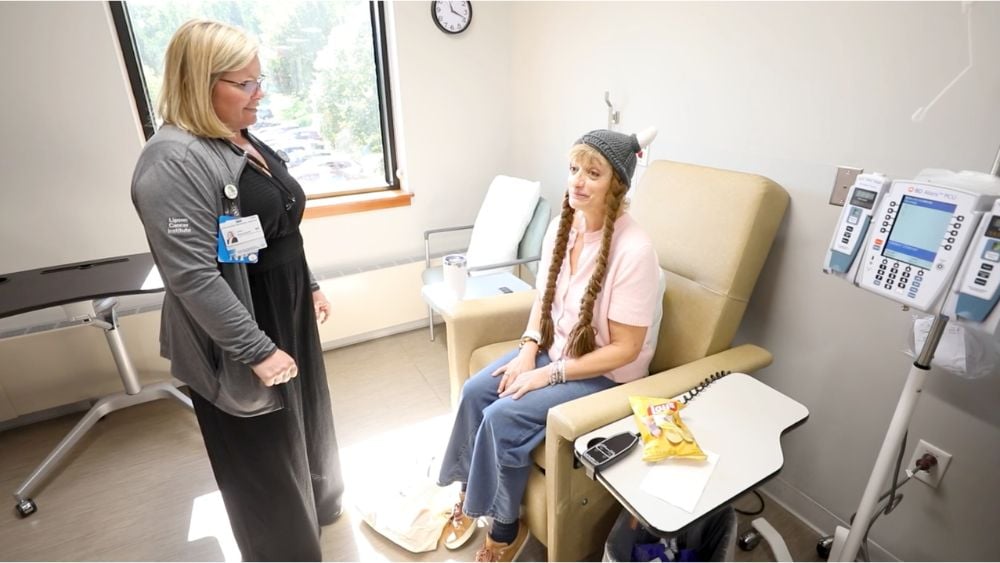 Janis Becker wearing a Viking hat during her final treatment at Lipson Cancer Institute in 2026.
Janis completed her final immunotherapy infusion in September 2026, ringing the bell with the Viking hat still on.
When Dr. Krupa performed the double mastectomy and lymph node surgery and biopsied the resected tissue and lymph nodes, the pathology team found no evidence of cancer remaining in the breast or axillary lymph nodes.
“Her cancer completely resolved just with the therapies alone,” Dr. Bodrog said. “That is the best case scenario.”
The importance of nurse navigators in breast cancer care
Introducing breast cancer nurse navigators into her cancer care team was another revelation for Janis. Nurse navigators help patients coordinate between their oncology, surgical, and radiation providers, as well as social workers, and put patients in touch with local breast cancer resources in the community.
Nurse navigators with the Lipson Cancer Institute are in constant communication with the multidisciplinary tumor board, a panel of cancer care specialists who help to care for all the cancer patients. This group includes medical oncologists, surgical oncologists, radiation oncologists, pathologists, and radiologists who share their knowledge and expertise so providers can come up with a plan in real time that is best for each patient.
“Before, I had to navigate my own cancer path. Now there is someone who holds your hand through that. That’s amazing. That feels great,” Janis said.
Supporting each patient’s personal goals
Each patient’s breast cancer journey is unique for many reasons. Based on someone’s age, the stage of their cancer, their emotional and physical needs, and many other factors, they may choose to pursue different types of treatment or therapies.
At Lipson Cancer Institute, the voice of every patient is at the center of their treatment plan. There is no “right” answer; it is very personal for each patient. For Janis, this meant choosing not to go through breast reconstruction and undergoing bilaterial double mastectomy with a flat aesthetic closure.
“The whole team doesn’t try to force you into one decision,” Janis said. “They work with you through everything.”
Dr. Krupa recalled having the conversation with Janis about her decision about breast reconstruction being focused on getting back to normal.
“For Janis, she wanted to get back to teaching and her day-to-day life,” Dr. Krupa said. “She felt like cancer has taken enough time from her and she wasn’t going to give any more to it.”
Finding community as a breast cancer patient and survivor
As she went through her most recent cancer journey, Janis connected with Breast Cancer Coalition of Rochester, talking with cancer survivors who had shared her experience.
As a survivor herself, she is considering how she can offer the same support and knowledge to breast cancer patients who need it during one of the most challenging times they will experience in their lives.
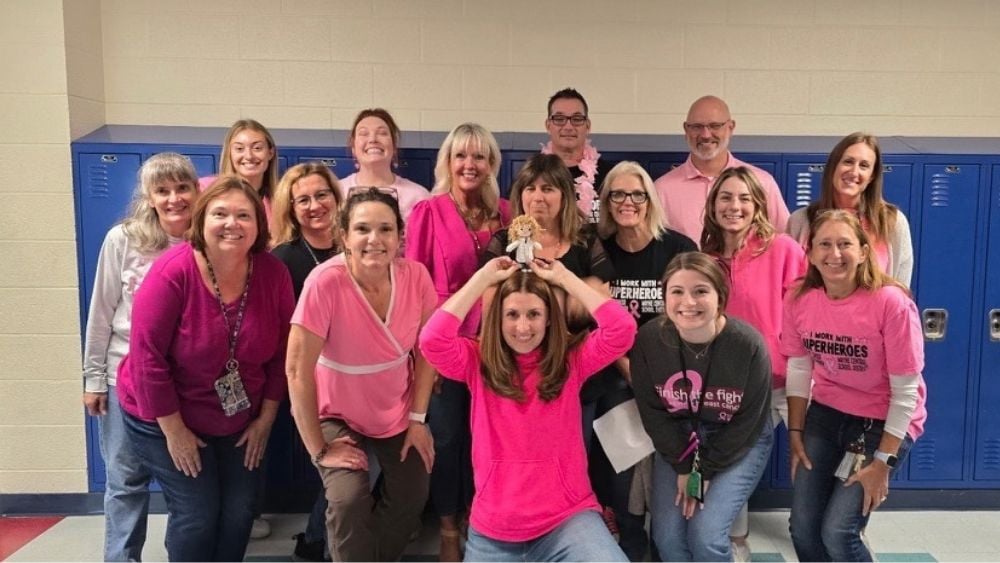 Teachers at T.C. Armstrong Middle School in the Wayne Central School District supporting Janis Becker.
The Wayne Central teaching community wrapped itself around Janis, raising money and walking in the Making Strides Walk in Rochester in her honor. They even created a miniature version of “Mrs. Becker” with wacky hair, a lab coat, and safety goggles that traveled around the school to classrooms or meetings so she would still feel like she was part of the staff throughout her treatment.
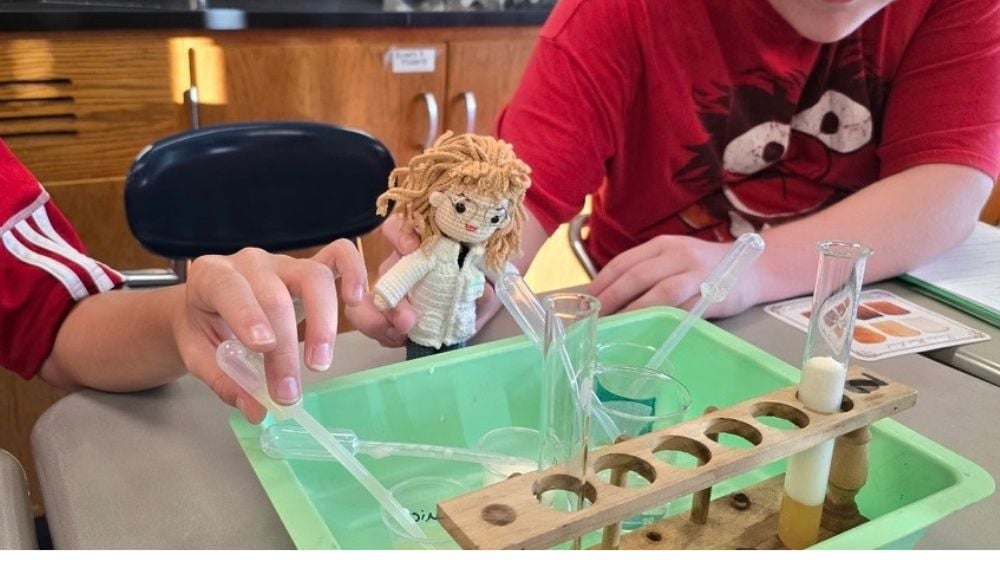 Students at T.C. Armstrong Middle School bring a crocheted "mini me" version of Janis Becker to their science lab.
The sense of community went beyond support groups and her family and friends, extending to Lipson. At her treatments and appointments, Janis said the staff made her feel like she was the only patient they were seeing that day. She remembered the little gestures meant so much during those months of therapy.
“Once when I was checking in around Christmas time, the receptionist had a tiny Christmas bracelet on a tree at her desk I thought was cute,” Janis said. “When I commented on it, she told me that I could just take it.”
“Any little gesture that could make your life better, every person you encounter does that for you.”
Returning to regular life again
This fall, Janis is cancer free once again.
Everyone’s breast cancer journey is different. Some people want to celebrate with a party or a big trip. Janis says her version of celebrating is to be normal – teaching in her classroom, going out to dinner with friends, kayaking in the Adirondacks, and being with her family.
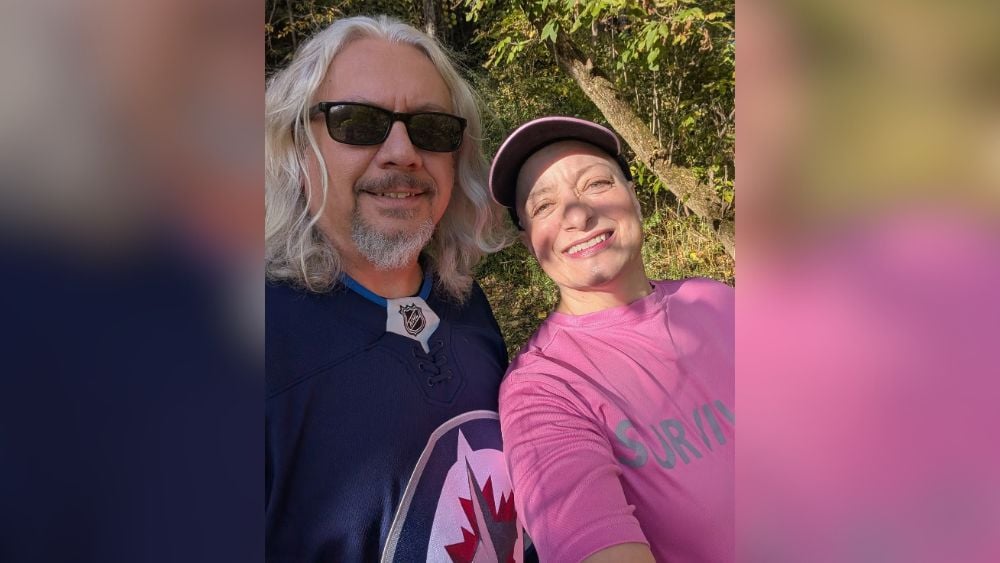 Stephen and Janis Becker hiking outdoors in 2026.
“Cancer took so much of my life and my life where I couldn’t go out in public and hang out with my kids,” Janis said. “My one son lives in Pittsburgh and the other lives in Albany, and cancer didn’t allow me to do that this past year. Now every weekend, I want to spend time with my family and friends.”
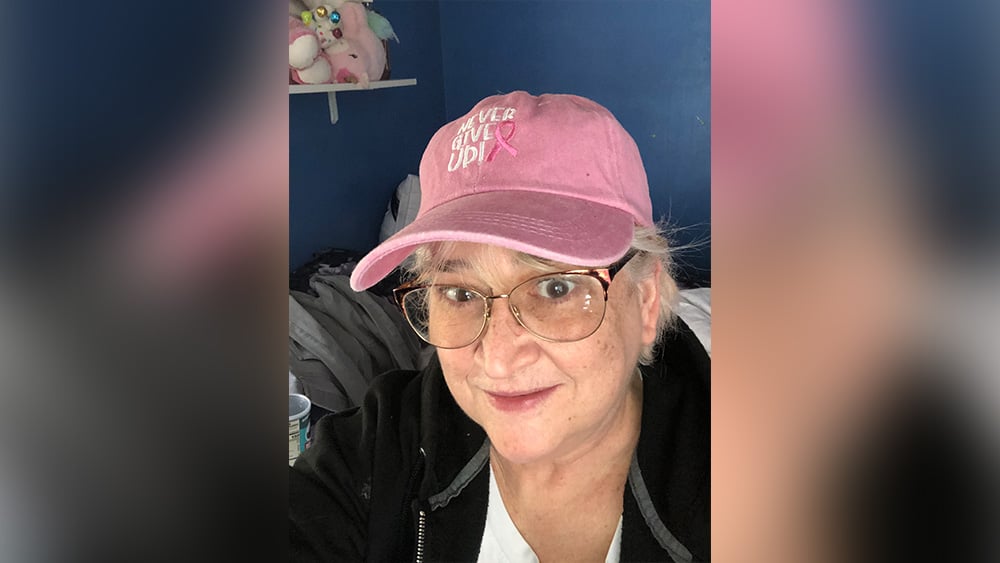
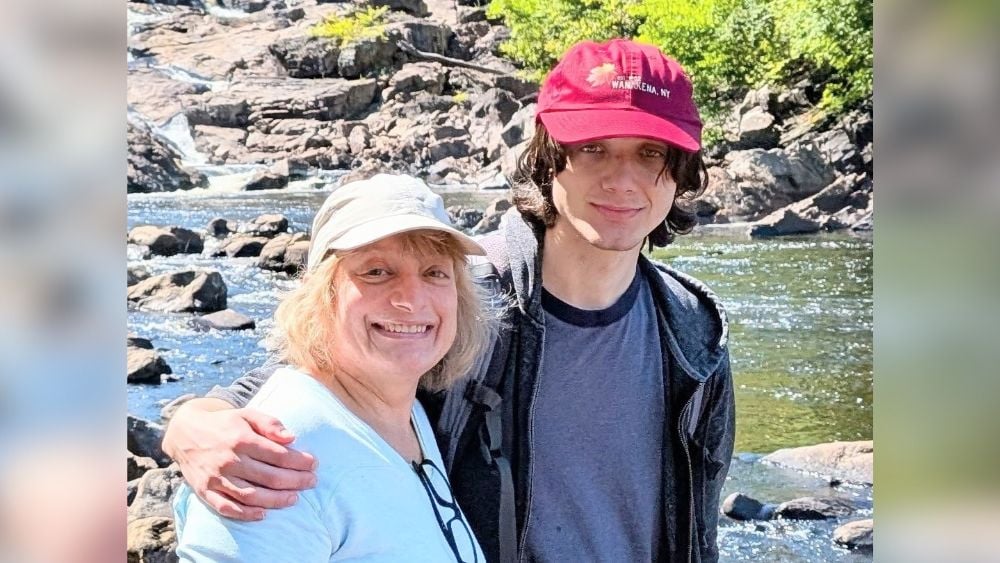 Janis Becker with one of her sons.
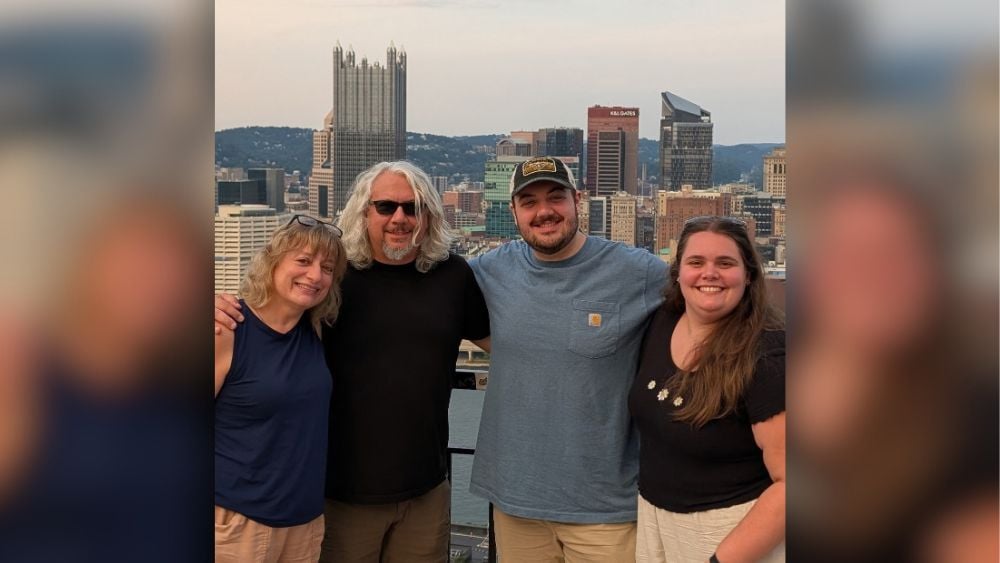 Janis and Stephen Becker visiting their son in Pittsburgh.
“It’s very satisfying to see patients in survivorship and know they got through all the treatments, did great, and got back to their day to day life,” Dr. Krupa said.
As she thinks about how her breast cancer journey has impacted her life, both 18 years ago and over the last couple years, Janis wants her cancer care team to know what a difference they made for her and everyone around her.
“I was feeling every day that this team at Rochester Regional Health is genuinely the best of the best. It’s more than just the nurses and doctors – it’s everyone.”
Take our online breast cancer screening assessment to find out.
Related Articles