Key Takeaways
- Regular physical activity is associated with a lower risk of developing several types of cancer.
- For cancer patients undergoing treatment, appropriate levels of exercise are shown to reduce fatigue and fight declines in physical function.
- Exercise looks different for everyone. Each person’s diagnosis, treatment plan, personal health, and symptoms affect their level of activity.
Discover the advanced cancer care, innovative treatment options, and personalized support services we offer all our patients at Lipson Cancer Institute.
New research into cancer treatments, screenings, and prevention continue to change how patients and providers are empowered to handle a new diagnosis.
Over the last decade, studies have shown appropriate levels of exercise have strong impact on both cancer patients and survivors – helping with side effects from cancer and cancer-related treatments, and the emotional and mental toll cancer can take on patients.
Sheema Chawla, MD, DipABLM, is a board-certified radiation oncologist and board-certified Lifestyle Medicine physician at Lipson Cancer Institute. With 15 years of experience treating cancer patients, she uses her lifestyle medicine training to explain how physical activity impacts health.
How exercise affects cancer
Regular physical activity is one of the most powerful tools people have to protect their health and prevent illness and chronic disease.
Health experts recommend 150 minutes of mild to moderate exercise or 75 minutes of vigorous exercise each week. To determine what mild, moderate, or vigorous scale mean, you can use the ‘talk test.’
- Mild: You can sing while exercising
- Moderate: You can talk but not sing while exercising
- Vigorous: You can’t talk or sing while exercising
Less than 20 years ago, cancer care teams advised their patients mostly to rest while undergoing treatment to help them reserve their energy. Now that advice is changing.
“We've gone from ‘Rest as much as possible’ to ‘Stay as active as you safely can,’” Dr. Chawla said. “That doesn't mean patients should push through everything. There are absolutely times when rest is needed, especially when someone is acutely ill or having significant side effects. But too much inactivity can lead to loss of strength and conditioning.”

How exercise helps during cancer treatment
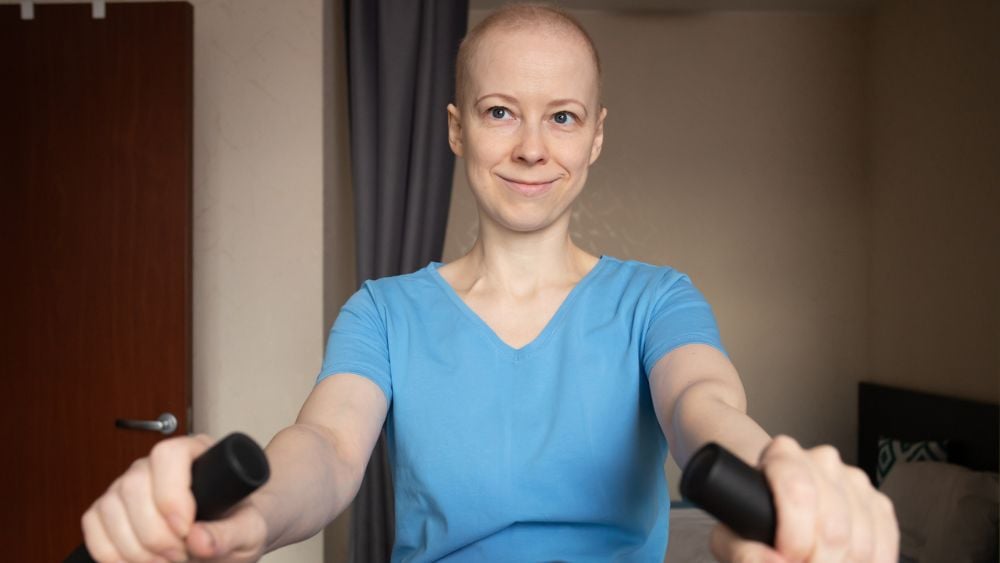
If you are undergoing cancer treatment, in most cases you are not only cleared to exercise but encouraged to do so – as long as your oncologist and cancer care team give you the thumbs up.
Recent scientific reviews suggest physical activity and exercise play an important role in supporting a patient’s overall cancer treatment plan – providing a variety of health benefits.
Reduces cancer-related fatigue
Exercise can help with cancer-related fatigue. Physical therapy and exercise are highly effective, evidence-based treatments for cancer-related fatigue.
You don’t always need to keep the same level of activity. If your energy level is lower after treatment or you simply need to rest, listen to your body.
Maintains strength
Staying active helps your body maintain its strength and endurance. Studies show this helps during and beyond cancer treatment – increasing your endurance and setting a foundation for your body to build on as you recover.
Whether it’s a walk for cardio or short rounds of strength training, it’s important to maintain muscle and heart health. These keep you going and allow you to do normal daily activities like getting the mail, showering, or walking your pet outside.
Not doing any physical activity can lead to a drop off in your overall strength – making it harder for your body to recover.
Supports emotional and mental health
Your psychological and emotional health are very important to a successful cancer outcome. Many people diagnosed with cancer also deal with symptoms of anxiety and depression during and after their cancer treatment.
Studies show regular physical activity helps reduce symptoms of anxiety and depression and increases patients’ sense of self-assurance. Good health includes good mental health.
Boosts patients’ health for surgery and recovery
Before you run a marathon, you need to train your body to run it. Cancer survivors describe cancer as a marathon; getting regular exercise before you start treatment can help your body recover stronger.
Scientific reviews suggest consistent physical activity before having surgery is helpful in maintaining regular function afterward. Exercise can help people regain strength and fitness, manage lingering fatigue, and simply feel better physically and emotionally.
“Exercise can't guarantee that cancer won't come back, but it is one thing they can do to support their overall health,” Dr. Chawla said.
How exercise can reduce cancer risk
As human beings, we all want to know if there is one special thing we could be doing differently that would drastically reduce our risk of getting sick.
While there is no magic pill everyone can take to eliminate any chance of getting cancer, there are several lifestyle factors we are able to change that lower our risk – including regular exercise.
Exercise can help with maintaining a healthy weight and may have beneficial effects on insulin regulation and inflammation.
Scientific reviews suggest a link between regular physical activity and a reduced risk of several types of cancer, including uterine, breast, and colon cancers.
Other modifiable risk factors include:
- maintaining a healthy body weight
- quitting smoking
- reducing or eliminating alcohol use
- eating less processed foods and red meat
“It is important to remember that cancer is complicated. “Exercise can lower risk; it can't eliminate it,” Dr. Chawla said. “I think it's important to say clearly that developing cancer is never someone's fault.”

Is it safe to exercise during cancer treatment?
For most patients, it is safe (and encouraged) to exercise during cancer treatment. However, it is important to note that you should talk with your oncology team about exercising safely.
The type of physical activity and duration will vary based on each patient’s cancer, treatment, blood counts, bone health, mobility, and other medical conditions.
“We don’t believe patients should push through everything,” Dr. Chawla said. “There are absolutely times when rest is needed, especially when someone is acutely ill or having significant side effects.”
Significant side effects may include but are not limited to:
- fever
- severe fatigue
- severe nausea or vomiting
- pain related to treatment
- balance problems
- neuropathy
- infections
“I often tell patients, ‘Listen to your body, but don't automatically assume that feeling tired means you need to stop moving,” Dr. Chawla said. “Sometimes the right amount of activity can actually help with cancer-related fatigue.”
Where Lipson Cancer Institute patients can start with exercise
Choose a type of physical movement is best for you and listen to your body. Start small and see what works – and what doesn’t work.
If you are unsure where to begin, try one of these options:
- Walk, bike, swim, or run
- Use weights or resistance bands at home
- Exercise programs like LiveStrong through YMCA
- YouTube videos of cancer-specific exercises
“Exercise doesn't have to mean going to a gym or following a complicated program,” Dr. Chawla said. “A walk, some light resistance exercises, or just moving more during the day all count. I tell patients to start where they are and adjust depending on how they feel.”
Start where you are. Do what you safely can. Even a little movement is worthwhile.Dr. Sheema Chawla, radiation oncologist at Lipson Cancer Institute
Regardless of what exercise you do or how often you do it, your cancer care team at Lipson Cancer Institute will work closely with you to make sure you are finding the balance in your care treatment plan.
“Exercise isn't about turning cancer patients into athletes. It's about helping people stay strong, independent, and able to do the things that matter to them,” Dr. Chawla said. “There is no perfect exercise plan - the goal is to keep moving in a way that feels safe and manageable.”
The Hope You Want. The Cancer Care You Need.
Discover the advanced cancer care, innovative treatment options, and personalized support services we offer all our patients at Lipson Cancer Institute.

Related Articles