Key Takeaways
- Aortic stenosis happens when the valve allowing blood flow from the heart to the rest of the body gets too narrowed and calcified.
- For patients with severe aortic stenosis, a TAVR procedure is a minimally invasive procedure that helps their heart function better.
- The team at Sands-Constellation Heart & Vascular Institute is well experienced in helping hundreds of patients repair aortic valves each year.
Sometimes your heart’s shape, walls, valves, or muscles limit how well it can work for your body. At the Center for Advanced Valvular and Structural Heart Disease, our specialists offer world-class expertise and innovative treatments – all driven by your preferences, goals, and values.
Your heart is a muscle that pumps and squeezes. With each movement, valves open and close to start and stop the flow of blood into the arteries that send blood throughout the rest of the body.
These valves are important; they are like a door that opens to send blood throughout the rest of the body then closes to keep blood from flowing back into the heart.
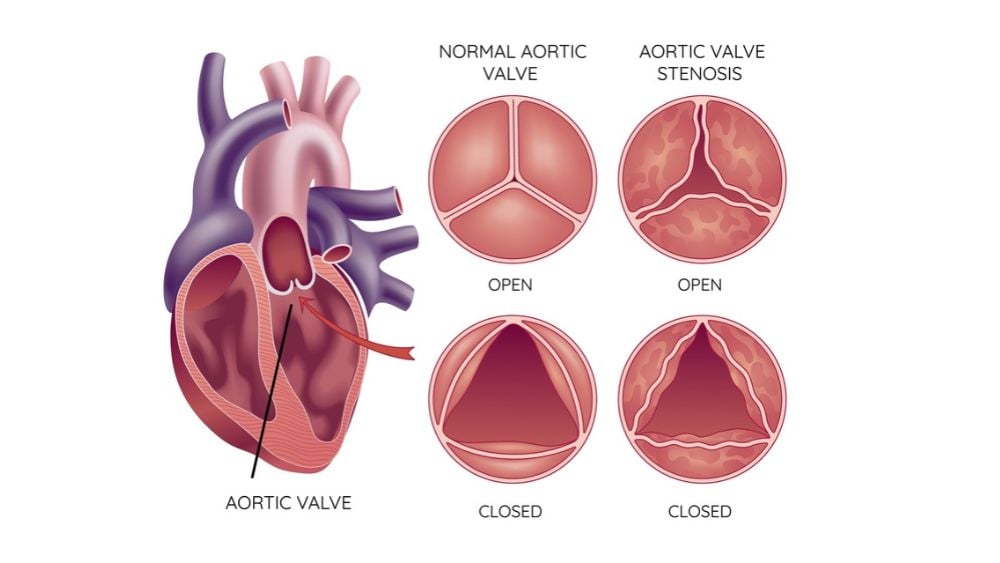
When the aortic valve gets too calcified and thickens, it cannot do its job effectively – leading to a condition called aortic stenosis.
“That extra resistance makes it hard for the heart to pump the blood out to the rest of the body,” said Brett Smith, PA-C, lead APP with the Center for Advanced Valvular & Structural Heart Disease at the Sands-Constellation Heart & Vascular Institute at Rochester General Hospital. “This stresses the heart out over time but also causes symptoms.”
What does aortic stenosis feel like?
Aortic stenosis can feel like several symptoms, including:
- shortness of breath
- dizziness with exertion
- chest pain
These symptoms are commonly linked to heart-related issues and should be addressed with a visit to a primary care provider or cardiologist, or at an emergency department for chest pain that is concerning.
How aortic stenosis is diagnosed
Aortic stenosis is usually a straightforward diagnosis. The condition is commonly discovered during a physical exam by a provider listening to the heart with a stethoscope.
The sound comes through the stethoscope as a murmur, making it simple to detect.
“When that valve is narrowed, it causes that blood to accelerate past the valve and it creates this murmur,” Smith said.
If a provider hears a heart murmur, they refer the patient to a cardiologist for an ultrasound of the heart called an echocardiogram. This type of imaging uses soundwaves to look at the heart valve and measure several things, including:
- valve area (how far it opens/closes)
- speed of blood flow
- mean gradient over the valve (pressure difference between the lower chamber of heart and the aorta)
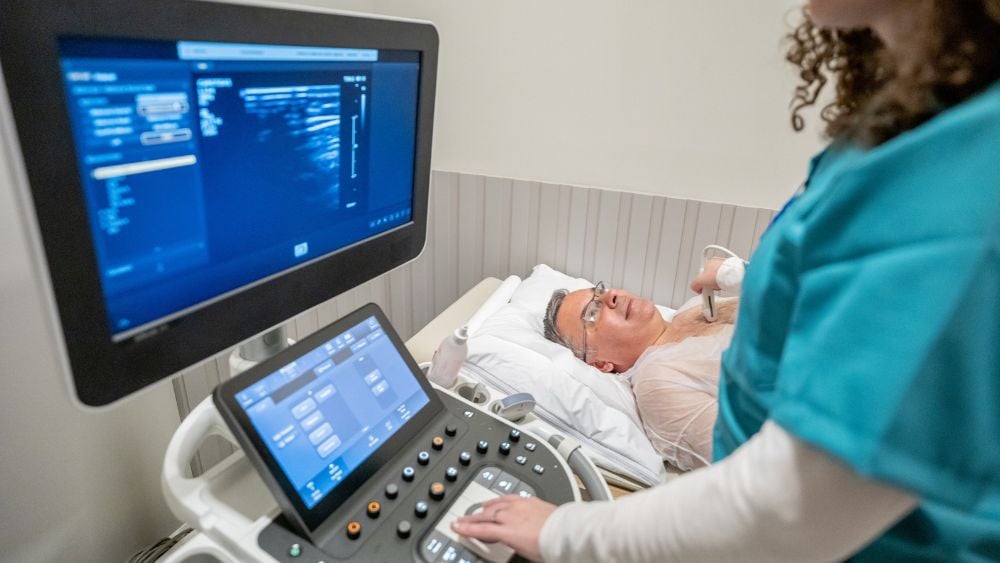
Based on these factors and several others, cardiology providers will determine how severe a patient’s aortic stenosis is and work with the patient and a cardiology team to create an individualized treatment plan.
How do you treat aortic stenosis?
Treatments for aortic stenosis depend on how far each patient’s condition has progressed.
There is no medication that can reverse aortic stenosis. Blood pressure medication may be prescribed for some patients if high blood pressure is a concern.
Mild or moderate aortic stenosis requires regular follow-up visits with a cardiology provider. During those visits, the provider will check on any symptoms the patient may have to see if they have gotten better or worse.

Regular imaging will also be performed to look at the valve and see if there are any changes to the valve.
“We need routine surveillance to see how the valve progresses,” Smith said. “If left untreated, we risk going from the mild or moderate range into the severe range.”
Patients with mild or moderate aortic stenosis can treat the condition by:
- quitting smoking
- reducing or eliminating alcohol use
- eating more plants
- eating fewer saturated fats and red meats
- getting better quality sleep
- getting regular physical activity
Severe aortic stenosis is linked to more significant symptoms and/or reduced heart function. When a patient has progressed to this point, they may be eligible for a minimally invasive procedure called a transcatheter aortic valve replacement (TAVR).
“Most people think TAVR is a surgery, but really it's not surgery at all,” said Pavinee Kaewjantuk, RN, a nurse navigator with the Center for Advanced Valvular & Structural Heart Disease.
Explaining the TAVR procedure
Once a patient and their cardiology team decides to move forward with a TAVR procedure, they undergo a CT scan to ensure they will be a good candidate for the procedure and take measurements for the valve replacement.
The patient then meets with an interventional cardiologist and cardiac surgeon at Rochester Regional Health to talk through the procedure and answer any questions to make sure they are making the right decision.
If the patient decides to have the TAVR procedure done, they schedule a date through the nurse navigator.
Once the day of the TAVR procedure arrives, the patient arrives at the cardiac catheterization lab and has light sedation administered through an IV line. In most cases, this is conscious sedation; the patient is sleeping and breathing on their own and does not need any assistance breathing.
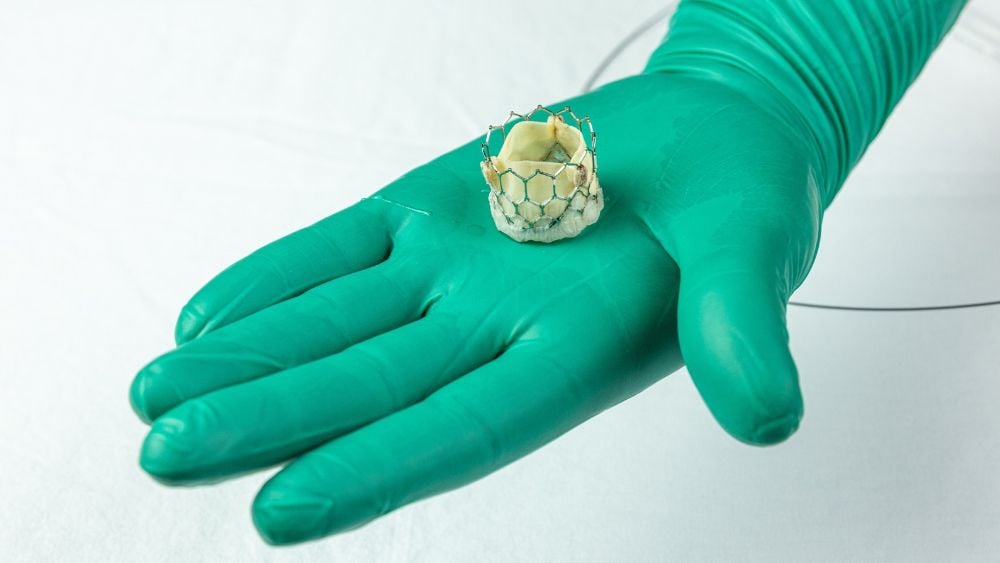
The procedure itself lasts 45-60 minutes. The cardiology team will poke into a blood vessel in the groin, then insert a pair of tiny tubes called catheters to travel up the blood vessel to the heart and deploy the replacement valve. One of the catheters carries a tiny camera to take pictures once the valve is in place.
Once the procedure is completed, the catheters are removed and the patient will gradually wake up from sedation and stay in bed for the next 4-6 hours as they recover while being monitored.
“Usually patients will stay one night, but if they are done early enough and they are recovering well, their cardiology team may approve them to go home the same day,” Kaewjantuk said.
After the patient is home, there are some minor restrictions on lifting and driving so the blood vessels can heal around the area where the catheters went in.
Within one to two weeks, most patients can get back to their daily routines – including exercise. The providers at the Sands-Constellation Heart & Vascular Institute will check in with patients during that timeframe to make sure they are healing well and everything is on track.
“We do encourage these patients to participate in our cardiac rehab program,” Smith said. “We have a great cardiac rehab program, specifically for patients who are post-valve replacement. It is very helpful in monitoring these patients and getting them back to feeling as good as they can with a new valve.”
Benefits of having a TAVR procedure
Customized valve replacement
For patients in their 50s or 60s, valve replacement looks different for patients who are in their 70s or 80s.
The prosthetic valves used for replacements are created with tissue inside of a stent frame that can last up to 10 years. For that reason, TAVR may be a great option for some patients but not others. This is why having a discussion with a multidisciplinary team including cardiac surgeons and interventional cardiologists makes sense.
Shorter hospital stay
With a TAVR procedure, most patients stay for one night in the hospital to be monitored. Previously, valve replacement surgery meant spending multiple nights in the hospital recovering from a major surgery.
This allows patients to go home much more quickly and start getting back to their regular activities sooner.
Quick recovery time
Since TAVR is minimally invasive, the procedure is less stressful for the body to recover from compared to surgery. This means patients are up and moving sooner after their procedure and also go home sooner.
Experienced care team
The heart care team at Rochester Regional Health’s Sands-Constellation Heart & Vascular Institute performs more than 250 TAVR procedures each year. Patients can trust that they are in the hands of expert, knowledgeable cardiology providers.
Can you live a long life with aortic stenosis?
Yes.
Early detection and referral to a cardiologist are vital to treating aortic stenosis properly.
As new innovative treatment options become more widely available, replacement valves are also lasting longer and carry less risk than previous methods of valve replacement.
“At Rochester Regional Health’s Sands-Constellation Heart & Vascular Institute, we have great cardiac surgeons and interventional cardiologists,” Smith said. “To be in the Rochester and Finger Lakes area and have the level of care offered at this institute, you can have this disease for multiple decades and not be limited in what you do.”
What happens if aortic stenosis is left untreated?
Without following up on symptoms or warning signs of aortic stenosis, patients risk going into severe aortic stenosis and developing significant symptoms or significantly reduced heart function.
One of the risks is that some patients may not have any symptoms and their heart muscle is still working hard while the valve is narrowed, so the heart gets weaker.
“You can end up with a really sick heart,” Smith said.
If left untreated, it is estimated that about 50 percent of severe aortic stenosis patients die within two years.
Why patients should choose Sands-Constellation Heart & Vascular Institute
At Rochester Regional Health, exceptional heart care starts with our team of world-class cardiologists and advanced practice providers.
For aortic stenosis patients, the interventional cardiologists and surgical team are compassionate, knowledgeable, and well experienced. By working closely together with nurses and schedulers, the multidisciplinary team walks each patient through their heart care journey according to what each one needs.
“At the end of the day, we come together to figure out what’s best for each individual patient,” Kaewjantuk said. “The patients are truly involved in the decision making process.”
“From the minute the referral to our structural heart team comes through, the nurse navigators start to work through what each patient specifically needs,” Smith said. “They work hard to get everything done as accurately and efficiently as possible so each patient receives the best care possible.”
Are You At Risk For Heart Disease?
Determine your risk for heart disease with our quick online assessment, and discover simple steps you can take to help lower your risk.
Related Articles